The Citation Crisis in Generative AI
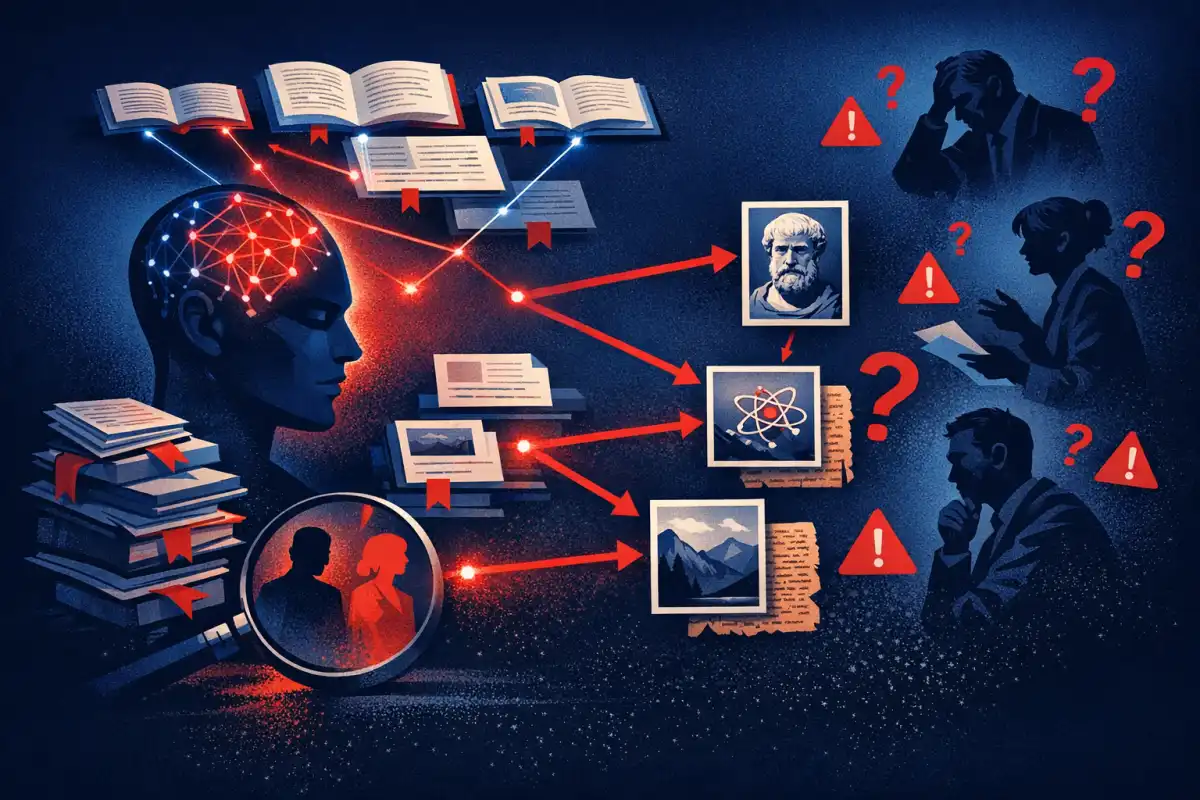
Generative AI systems have transformed how people access information. But this transformation comes with a growing problem: citations are broken. Users receive confident answers without clear attribution. Sources are buried behind tiny links or omitted entirely. The connection between claim and evidence becomes opaque. This is not just a technical issue. It is a crisis of trust, credibility, and intellectual honesty.
The problem manifests in several ways. First, vague attribution. An answer might cite a source but not specify which claim the citation supports. The user sees a reference but cannot determine what it verifies. Second, incomplete citation. Complex answers draw from multiple sources but only cite one or two. The remaining claims appear unsupported. Third, outdated citation. An answer cites a source that has been updated or contradicted by more recent information. Fourth, missing citation. Some assertions appear without any reference at all, presented as general knowledge even when they are specific and disputable.
These patterns create real harm. Users make decisions based on information they cannot verify. Students and researchers incorporate unverified claims into their work. Businesses act on outdated data. Public discourse suffers when arguments cannot be traced to their sources. The convenience of generative answers comes at the cost of transparency and accountability.
The root causes are both technical and economic. On the technical side, linking specific claims to specific sources is difficult. Language models generate text token by token. The citation decision happens after the text is generated. The model must then identify which sources support which claims. This requires sophisticated post-processing that adds latency and complexity. Some systems implement this poorly. Others skip it entirely to maintain speed.
On the economic side, citations reduce engagement. A citation link invites the user to leave the AI interface and visit another site. This is bad for retention metrics. It reduces session time and page views. Product teams, measured on engagement, have little incentive to optimize citation quality. The incentives point toward keeping users inside the walled garden, not sending them elsewhere.
The architecture of retrieval-augmented generation contributes to the problem. These systems retrieve content from an index, feed it to a language model, and generate an answer. The retrieval step selects potentially relevant documents. The generation step synthesizes an answer from the retrieved context. The citation step links claims back to sources. This pipeline has inherent limitations. If the retrieved content is incomplete or biased, the answer will be too. If the model hallucinates claims not present in the context, there is no source to cite. If the citation logic is imprecise, attribution becomes vague.
Different AI engines handle citations differently. Some provide detailed inline citations with clear claim-source mapping. Others use generic footnotes that leave users guessing. Some cite multiple sources per claim. Others cite only one source per answer. The best implementations allow users to drill down into specific claims and see the exact supporting text. The worst provide no citations at all or hide them behind multiple clicks. This inconsistency means citation quality depends entirely on which engine a user happens to use.
Content creators feel the impact. Publishers invest in creating high-quality, authoritative content. When AI systems cite that content vaguely or incompletely, the value transfer is diminished. The publisher does not receive appropriate credit. The user cannot verify the source. The ecosystem that funds quality content is undermined. This creates perverse incentives. Publishers might optimize for being cited at all rather than cited correctly. They might structure content to be easily extractable rather than genuinely valuable. The race to the bottom benefits no one.
Users are becoming more skeptical. Early enthusiasm for generative AI has given way to cautious trust. People double-check answers with traditional search. They look for citations before accepting claims. They share screenshots of AI errors on social media. The novelty has worn off. The expectation has shifted from magic to utility. Citations are a key part of that utility. Without them, generative AI remains a novelty tool rather than a reliable source of information.
The legal implications are unfolding. Publishers have already sued AI companies over copyright infringement. Courts will eventually weigh in on fair use, transformation, and attribution. Clear, accurate citations could serve as a legal defense. Vague or missing citations strengthen the case that AI systems are freeriding on copyrighted content. The regulatory landscape is uncertain. But one thing is clear: the status quo is unsustainable.
Technical solutions exist. Improved retrieval systems can find more relevant and diverse sources. Better language models can be trained to cite more precisely. Post-processing modules can map claims to sources more accurately. User interfaces can surface citations more prominently. These solutions require investment and innovation. The technology is not the bottleneck. Priorities and incentives are.
Standardization could help. An industry-wide specification for how citations should be formatted and presented would create consistency. Users would know what to expect. Publishers could optimize for a known standard. Different engines could compete on quality rather than format. Some early efforts at citation standards exist. But broad adoption requires cooperation across competing companies. This is challenging in a competitive market where each company wants to define its own interface.
User education is part of the solution. Many users do not understand the limitations of generative AI. They assume answers are comprehensive and accurate. They do not know that citations can be incomplete or misleading. Educating users about how to verify AI-generated information is essential. This includes teaching them to check citations, look for conflicting sources, and question assertions that lack references. Some AI companies are adding disclaimers and educational prompts. These are steps in the right direction but far from sufficient.
The research community is actively working on citation quality. New architectures combine retrieval and generation more tightly. Some systems generate claims and citations jointly rather than sequentially. Others use fact-checking modules that verify claims before they are presented. Research on attribution-aware training teaches models to cite sources by design. These approaches are promising but not yet deployed at scale. The gap between research and production remains significant.
Publishers can take matters into their own hands. Optimizing content for citation clarity is possible. Structuring content with clear sections and subheaders helps models identify the relevant source for each claim. Using declarative statements makes extraction easier. Providing structured data and schema markup gives engines more to work with. Including publication dates and author information adds context. Publishers who invest in these practices may see better citation quality as a result.
Some argue that citations are a temporary problem. As AI models become more capable, they might simply become sources themselves rather than aggregators of human-generated content. The model could incorporate knowledge directly, eliminating the need for external citations. This perspective misunderstands the purpose of citations. They are not just about where information comes from. They are about verification, accountability, and intellectual credit. Even if models know facts without retrieval, users deserve to know the basis for those facts. Citations will remain essential as long as information has provenance.
The future of generative AI depends on solving the citation problem. Trust is the foundation of any information system. Without trust, adoption stalls. Liability risks increase. Regulatory scrutiny intensifies. The companies that prioritize citation quality will build lasting user relationships. Those that deprioritize it will face backlash and regulation. The market will not tolerate opaque, unverifiable answers forever.
Users should demand better. When using generative AI, look for citations. Click through to sources. Verify claims. Provide feedback when citations are missing or unclear. Engagement metrics currently drive product priorities. If users consistently penalize poor citation behavior, companies will respond. The power lies with users to set expectations.
The citation crisis is solvable. The technical challenges are substantial but not insurmountable. The economic misalignments are real but can be corrected. The legal uncertainties will be resolved through courts and legislation. What is missing is not capability but commitment. The generative AI industry must decide whether it wants to be a reliable source of information or just a convenient one. The difference is citations.
The Economics of Bad Citations
Understanding why citations are broken requires looking at the business models of generative AI companies. These companies are measured on user engagement, retention, and monetization. Citations work against these metrics in subtle but important ways.
Every citation is an exit opportunity. When a user clicks a citation link, they leave the AI interface. This reduces session duration, a key engagement metric. It reduces the number of follow-up queries, another engagement signal. It introduces an opportunity for the user to switch to a different platform. Product teams, optimized for engagement, naturally deprioritize features that drive users away.
Citations also increase complexity and cost. Good citation systems require additional processing steps. Retrieval must be more sophisticated. Post-processing modules must map claims to sources. User interfaces must present citations clearly. These steps add latency and computational cost. In a market where speed and cost efficiency are competitive differentiators, any additional processing faces resistance.
The advertising model complicates matters further. If AI companies monetize through advertising, citations reduce ad inventory. Every click to an external site is a click not shown an ad. The revenue model incentivizes keeping users in-ecosystem rather than sending them to sources. Subscription models face a different version of the same problem. Users paying for a premium AI experience expect comprehensive answers without additional research. Citations implicitly acknowledge that the AI answer is incomplete.
These economic pressures are not excuses. They are explanations. Understanding them helps identify potential solutions. If citations hurt engagement metrics, then engagement metrics need to change. If citations add cost, then architectures need to become more efficient. If citations conflict with monetization, then monetization models need to evolve. The current misalignment is not inevitable. It is a design choice.
The Technical Landscape of Citation Systems
Building good citation systems is genuinely difficult. The technical challenges explain some of the current shortcomings. But they do not excuse them. Let us examine the technical landscape in detail.
Retrieval quality is foundational. If the system retrieves irrelevant or low-quality sources, citations will be poor regardless of what follows. Modern retrieval uses dense vector embeddings, sparse keyword matching, and sometimes hybrid approaches. The best systems also incorporate query understanding, result diversity, and source authority. Even with these techniques, retrieval is imperfect. The index may not contain the best source. The query may be ambiguous. The ranking may favor popularity over relevance.
Generation presents another challenge. Language models generate text token by token. They do not inherently track which source contributed to which claim. The model might synthesize information from multiple sources without explicit attribution. It might hallucinate claims not present in any source. It might paraphrase in ways that obscure the original source. Some research addresses this by training models to generate citations as part of the text generation process. Others use post-hoc attribution that maps generated claims back to retrieved content.
Mapping claims to sources is algorithmically complex. A single generated claim might draw from multiple sources. A single source might support multiple claims. The mapping is many-to-many. Determining the optimal mapping requires understanding both the generated text and the retrieved content. Some systems use semantic similarity between claims and source passages. Others use dependency parsing to understand claim structure. The most sophisticated use multiple signals combined through learned models.
Presentation matters too. How citations are displayed affects user perception and utility. Inline links can clutter the reading experience. Footnotes can be hard to associate with specific claims. Hover tooltips require discovery. Different users have different preferences. The best systems provide multiple viewing options and allow users to drill down into the evidence. The interface should make citation status immediately obvious. Users should know at a glance which claims are well-supported and which are speculative.
Emerging Approaches and Solutions
Despite the challenges, promising approaches are emerging from both industry and academia. These point toward a future where citations are reliable, useful, and ubiquitous.
Joint generation and citation is one direction. Instead of generating text first and adding citations later, these systems generate text and citations simultaneously. The model is trained to include citation markers as it produces each claim. This reduces the complexity of post-hoc attribution. It also encourages the model to ground each claim in specific sources rather than synthesizing vaguely. The tradeoff is generation speed. Joint approaches can be slower than sequential ones.
Self-verification loops add reliability. After generating an answer, the system checks each claim against the retrieved sources. Claims that are not well-supported are either removed or flagged. This reduces hallucinations and improves citation accuracy. Some systems iterate this process multiple times, refining both the answer and the citations with each pass. The computational cost increases but the quality improves significantly.
Citation quality scoring provides transparency. These systems evaluate the strength of each citation on multiple dimensions. Is the source authoritative? Is the claim precisely supported? Is the information current? The quality score is displayed to users, allowing them to gauge confidence. This moves beyond binary cited versus uncited to a nuanced assessment of evidence quality.
User-controlled citation depth puts people in charge. Some implementations let users choose how much citation detail they want. Minimal mode shows only a few top-level sources. Standard mode provides inline links to relevant passages. Detailed mode exposes the full retrieval context and claim-source mapping. This accommodates different use cases. A casual user might want minimal citations. A researcher might want full transparency.
Source diversity metrics address concentration. When an answer cites multiple sources, these systems check whether the sources are independent or whether they all trace back to the same original content. Diverse sources increase confidence. Concentrated sources flag potential citation laundering. This helps users detect when a claim appears well-supported but actually rests on a single foundation.
The Role of Publishers and Content Creators
Publishers are not passive victims of bad citations. They can actively improve the quality of attribution by optimizing their content for machine understanding and citation precision.
Content structure matters. Clear hierarchical structure with descriptive headings helps models navigate content. Using semantic HTML elements properly provides structural signals. Breaking complex topics into focused sections makes claim-source mapping easier. The best structure for human readers often aligns with the best structure for machine readers.
Claim formatting affects extractability. Declarative statements are easier to extract and cite than questions or implications. Specific claims with clear subjects and verbs cite better than vague assertions. Including publication dates, author names, and update timestamps provides context for recency evaluation. These small formatting choices have outsized effects on citation quality.
Structured data provides explicit signals. Schema.org markup can declare claims, cite sources, and provide metadata. While not all AI engines currently parse this markup comprehensively, the trend is toward deeper use of structured data. Publishers who invest in semantic markup position themselves for better citation quality as systems evolve.
Original content creation builds authority. Conducting and publishing original research creates citable assets. Analyzing proprietary data provides unique insights. Interviewing experts generates quotable material. Content that can only be found in one place is inevitably cited when that information is needed. This drives primary citation status, which carries more weight than supporting citations.
Regulatory and Legal Considerations
The regulatory landscape around generative AI and citations is still taking shape. Several directions seem likely based on current trends and early cases.
Copyright law will play a central role. Publishers argue that AI systems using their content without proper attribution constitute infringement. AI companies claim fair use based on transformation and the non-expressive nature of the use. Courts will eventually clarify the boundaries. Clear, accurate citations could serve as a factor in fair use analysis. The argument is that proper attribution benefits the original creator by driving traffic and recognition. Vague or missing citations strengthen the infringement case.
Consumer protection regulations may apply. If AI systems present information as factual without adequate sourcing, regulators might view this as deceptive. The Federal Trade Commission in the United States has already signaled interest in AI transparency. Similar regulators in Europe and elsewhere are watching closely. Requirements for clear attribution could emerge through enforcement actions even without new legislation.
Sector-specific regulations will affect some domains more than others. Healthcare information, financial advice, and legal guidance already face strict rules about accuracy and sourcing. AI systems providing information in these areas will need to meet or exceed existing standards. This may mean more conservative citation practices, human review of high-stakes answers, and clear disclaimers about limitations.
International coordination will be important. AI systems operate globally, but laws vary by jurisdiction. A citation practice acceptable in one country might violate regulations in another. Harmonization through international standards bodies or treaties could reduce fragmentation. In the absence of coordination, AI companies will need to implement jurisdiction-specific citation policies.
A Path Forward
Solving the citation crisis requires action from multiple stakeholders. No single entity can fix the problem alone. A coordinated approach is necessary.
AI companies must prioritize citation quality as a core product feature rather than an optional add-on. This means investing in better retrieval, more precise generation-citation alignment, and clearer user interfaces. It means redesigning engagement metrics to reward transparency rather than penalize it. It means accepting that some users will leave to verify sources. The short-term engagement cost is an investment in long-term trust.
Publishers must optimize content for citation while maintaining editorial quality. This is not about gaming the system. It is about making content structure and claims machine-readable without compromising human readability. It is about creating original, citable assets rather than derivative summaries. It is about participating in the ecosystem rather than fighting it.
Researchers must continue advancing the state of the art. Better retrieval algorithms, more accurate attribution methods, and more efficient joint generation-citation models are all needed. Open benchmarks for citation quality would help compare approaches objectively. Publishing negative results and failed attempts would accelerate collective learning.
Regulators should provide clear guidance on citation expectations. Ambiguity benefits no one. Clear rules about what constitutes adequate attribution will help AI companies know what to build and publishers know what to expect. Enforcement should focus on the most egregious violations while allowing room for innovation and experimentation.
Users must demand better and use citations when available. Click through to sources. Verify claims. Report errors. Provide feedback when citations are missing or misleading. Market pressure is a powerful driver. If users consistently choose better-cited alternatives, companies will respond.
The citation crisis is not inevitable. It is a consequence of choices made about priorities, incentives, and architecture. Different choices lead to different outcomes. The generative AI industry stands at a fork. One path leads to opaque, unreliable systems that users eventually abandon. The other leads to transparent, trustworthy systems that become indispensable infrastructure for information access. The choice is ours. The time to act is now.
How Visible Is Your Brand to AI?
88% of brands are invisible to ChatGPT, Perplexity, and Gemini. Find out where you stand in 60 seconds.
Check Your AI Visibility Score Free