AI Content Verification: How to Detect AI-Generated Text and Prove Authenticity
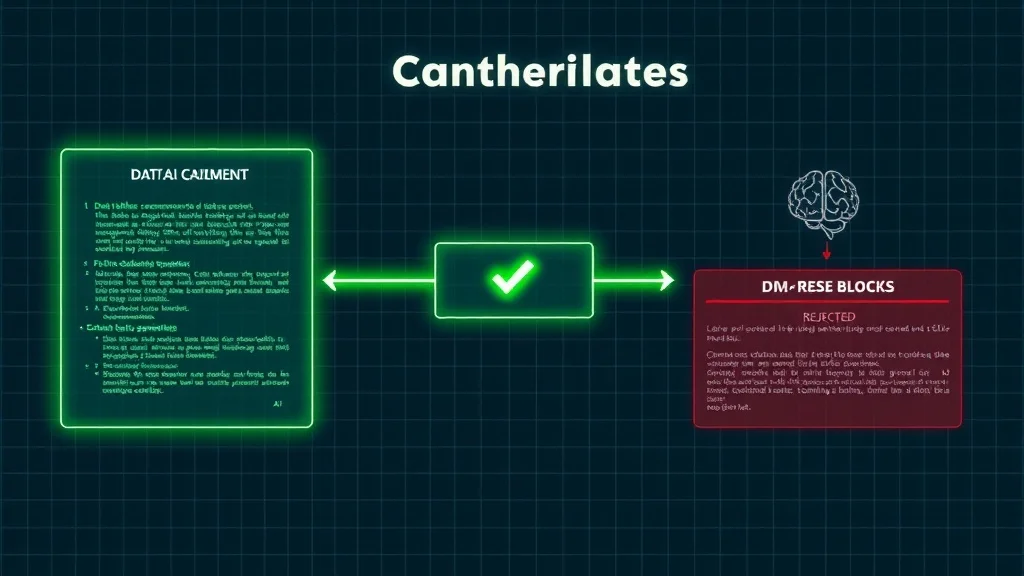
AI-generated content is everywhere. Articles, emails, social media posts, and even code are increasingly written by machines. This creates a challenge for businesses, publishers, and individuals who need to verify content authenticity. How do you know if content was written by a human or generated by AI? More importantly, how do you prove it?
The line between human and AI writing is blurring. Modern language models produce fluent, coherent text that is difficult to distinguish from human writing. They capture style, tone, and nuance. They can mimic specific voices and adapt to different contexts. Traditional methods of detecting AI writing are becoming less reliable as models improve. New approaches are needed.
Understanding AI writing patterns is the first step. AI models tend to produce text with certain characteristics. They often use consistent sentence structure and vocabulary. They may avoid unusual phrasing or creative metaphors. They tend to be balanced and neutral, avoiding strong opinions unless specifically prompted. They can struggle with truly novel ideas or personal anecdotes. Recognizing these patterns can help identify AI-generated content.
AI detection tools have emerged to address this challenge. These tools analyze text for statistical patterns that indicate machine generation. They look at factors like perplexity, burstiness, and consistency. Perplexity measures how surprised a model is by the text. AI-generated text typically has lower perplexity because it follows predictable patterns. Burstiness measures variation in sentence structure and length. AI text tends to have less burstiness than human writing.
Popular detection tools include GPTZero, Originality.ai, and Turnitin's AI detector. Each uses different methodologies and has different strengths and weaknesses. GPTZero focuses on detecting patterns specific to GPT models. Originality.ai combines AI detection with plagiarism checking. Turnitin is widely used in academic settings. No tool is perfect, and false positives and negatives are common. Results should be interpreted with caution.
The limitations of detection tools are significant. They can be fooled by techniques like paraphrasing, editing, or combining AI with human writing. They struggle with short texts where there is less data to analyze. They can misidentify human writing as AI, especially if the human writes in a consistent, structured style. They may miss AI writing that has been heavily edited or customized. Relying solely on automated detection is risky.
Human verification remains essential. Subject matter experts can often spot AI-generated content through domain knowledge. AI may make factual errors or miss nuances that experts catch. AI may use outdated information or fail to reference recent developments. Human reviewers can evaluate reasoning, argumentation, and depth of analysis in ways that automated tools cannot.
Content provenance tracking is emerging as a solution. Digital watermarks and cryptographic signatures can embed information about content origin. Blockchain technology can create immutable records of content creation. Metadata can capture authorship, timestamps, and editing history. These approaches make it harder to falsify content origin and easier to verify authenticity.
Organizational policies and processes are crucial. Establish clear guidelines on AI use in content creation. Require documentation when AI is used. Implement review processes for AI-generated content. Train staff on detection techniques and ethical considerations. Create accountability systems that discourage misrepresentation of AI content as human-written.
Technical verification methods are evolving. Style analysis can compare writing samples to known human authors. Statistical models can detect subtle patterns in word choice and sentence structure. Network analysis can trace content back to sources. These techniques are becoming more sophisticated as the challenge grows.
For businesses, the risks of undetected AI content are real. Publishing AI-generated content as original work can damage credibility. Relying on AI for critical content can lead to errors or inaccuracies. Failing to disclose AI use can violate transparency expectations. Customers and partners increasingly expect honesty about AI involvement in content creation.
For publishers, maintaining trust is paramount. Readers value human expertise and authentic voices. Clearly labeling AI-generated or AI-assisted content preserves trust. Some publications are adopting systems like C2PA (Coalition for Content Provenance and Authenticity) to provide verifiable content credentials. These standards help readers understand content origins.
For educational institutions, academic integrity is at stake. Students using AI to write essays or papers without disclosure undermines learning. Institutions are adapting policies and detection methods. But the focus is shifting from punishment to education, teaching students to use AI ethically and cite its use appropriately.
The legal landscape is developing rapidly. Copyright issues around AI-generated content remain unsettled. Disclosure requirements are being considered in some jurisdictions. Regulations around transparency in AI use are emerging. Organizations should stay informed about legal obligations in their jurisdictions.
Looking ahead, the cat-and-mouse game between AI generation and detection will continue. As detection improves, generation techniques will evolve. As watermarks and tracking become common, new methods of obfuscation will emerge. The solution is not purely technical. It requires cultural, ethical, and organizational approaches alongside technical tools.
The best defense against deceptive AI content is a holistic approach. Combine automated detection tools with human verification. Implement robust policies and processes. Use technical safeguards where possible. Foster a culture of transparency and authenticity. Invest in training and education. No single method is sufficient, but together they create meaningful protection.
For content creators, the message is clear. Be transparent about AI use. Use AI as a tool, not a replacement for human judgment and creativity. Add value through human insight, expertise, and voice. The most valuable content combines AI efficiency with human depth and authenticity.
The age of AI content is here to stay. The question is not whether AI will generate content, but how we will verify, manage, and use it responsibly. Organizations that develop robust verification practices will be better positioned to navigate this new landscape while maintaining trust and credibility.
Authenticity matters more than ever. In a world of machine-generated content, human-created content with clear provenance becomes increasingly valuable. Invest in verification, transparency, and the human touch. That is how you stand out in the age of AI.
How Visible Is Your Brand to AI?
88% of brands are invisible to ChatGPT, Perplexity, and Gemini. Find out where you stand in 60 seconds.
Check Your AI Visibility Score Free