ChatGPT vs Perplexity vs Gemini: Which AI Search Engine Actually Recommends Your Brand?
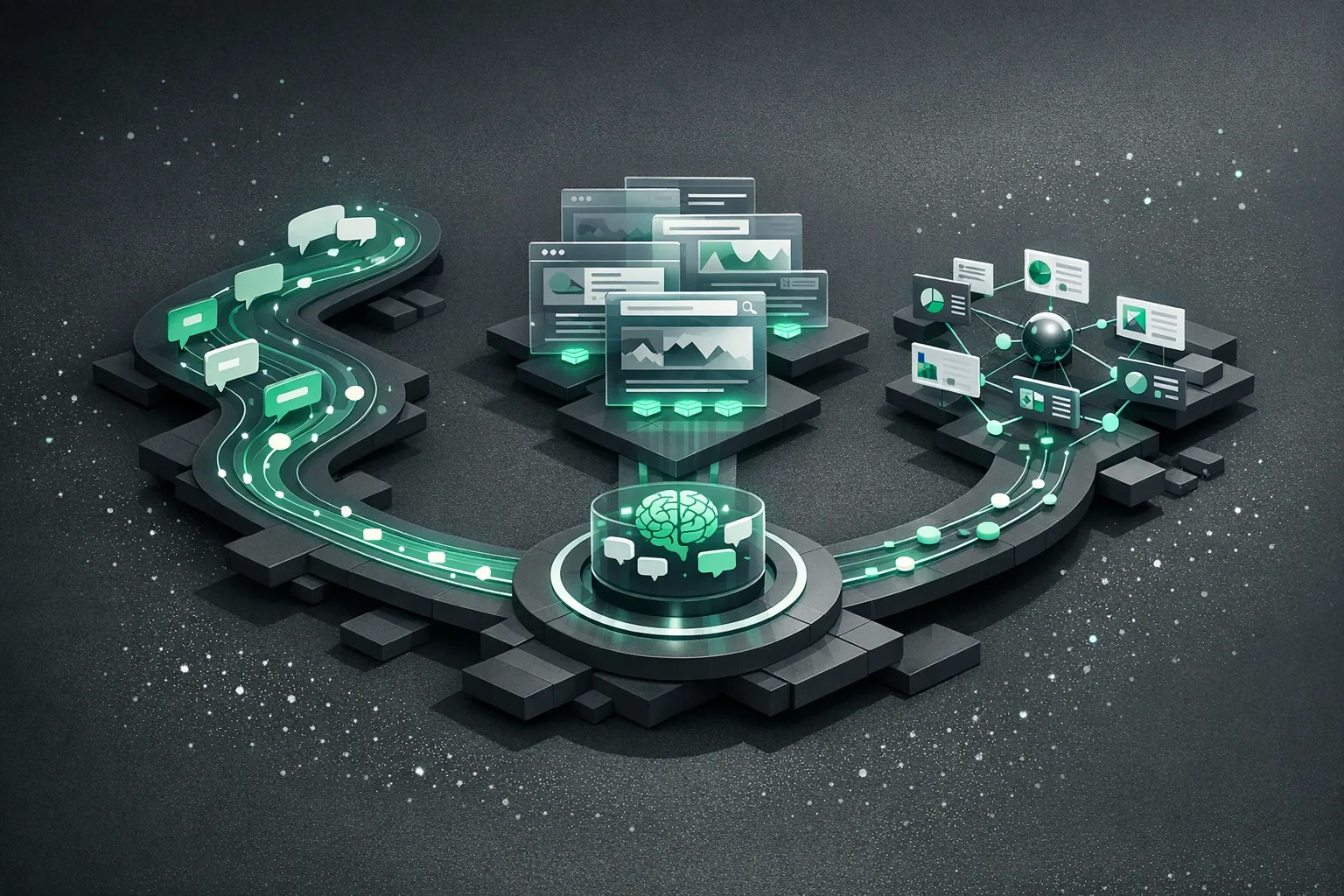
Most brands optimizing for AI visibility make the same mistake: they pick one engine, optimize for it, and assume the work is done.
The data says that approach leaves 60-70% of your potential AI citations on the table.
ChatGPT, Perplexity, and Gemini do not share citation mechanics. They do not share source indexes. They do not even share the same underlying search infrastructure. ChatGPT relies on a blend of parametric knowledge and Bing-assisted retrieval. Perplexity runs real-time web search with inline source transparency. Gemini pulls from Google's organic index and Knowledge Graph with a heavy bias toward already-ranking pages.
The result: a brand that dominates Gemini citations can be functionally invisible in ChatGPT, and a brand that appears in Perplexity's source links may never show up in Gemini's answers. This is not a minor variation. It is a structural fragmentation of AI discovery that requires a fundamentally different optimization approach for each engine.
Here is what the latest 2026 data reveals about how each engine decides whether to recommend your brand.
The Citation Architecture Split
Before comparing engines, it helps to understand the infrastructure layer underneath. The AI citation ecosystem splits into two major citation engine families.
Google's search infrastructure powers citations for ChatGPT, Gemini, Google AI Mode, and Grok. When these engines need to retrieve web content, they draw from Google's index either directly (Gemini) or through Bing's index, which itself overlaps significantly with Google's crawled content (ChatGPT).
Brave Search powers citations for Claude and Perplexity. When Perplexity shows you a source link, that source was found through Brave's independent web index. When Claude browses the web to answer a question, it uses Brave as its retrieval backbone.
This split matters because it means the citation ecosystem is not one market. It is two markets, each with different ranking dynamics, different content preferences, and different optimization levers. If your brand is well-indexed in Google but invisible to Brave's crawler, you are missing citations in Perplexity and Claude entirely.
ChatGPT: The Parametric Giant With Shrinking Brand Citations
ChatGPT remains the largest AI search surface by user volume. With roughly 400 million weekly active users and 100 million daily active users, it represents the single biggest opportunity for brand visibility in AI-generated answers.
But the citation data tells a concerning story for brands relying on ChatGPT.
According to Writesonic's analysis of GPT-5.5 citation behavior, brand websites received citations 47% of the time in ChatGPT's answers after the GPT-5.5 model update, down from 57% before the update. That 10-percentage-point drop happened overnight when OpenAI swapped models, and it illustrates a core risk of ChatGPT optimization: model updates can erase citation gains in a single deployment cycle.
ChatGPT's citation behavior operates on two layers. The first is parametric knowledge: information embedded in the model during training. If your brand was well-represented in the training data, ChatGPT may mention you without ever retrieving a live web page. The second is retrieval-augmented generation, where the model searches the web via Bing to find current information when the user's query demands it.
This dual system means ChatGPT citations are harder to engineer than they appear. You cannot simply optimize a page and expect it to appear, the way you might with Google SEO. Whether ChatGPT cites you depends on a combination of training data representation, real-time retrieval relevance, and the model's internal decision about whether a citation adds value to its answer.
On the positive side, ChatGPT referral traffic converts. Data from the Searchless AI referral traffic benchmark shows ChatGPT referral traffic converting at 14-16%, significantly higher than typical organic search conversion rates. The users who click through from a ChatGPT answer are further along in their decision process than most search traffic.
Perplexity: Real-Time Retrieval With Source Transparency
Perplexity operates on a fundamentally different philosophy than ChatGPT. Every answer includes inline citations with direct links to source material. The user can see exactly where Perplexity found its information and click through to verify.
This source transparency creates a different dynamic for brand visibility. When Perplexity cites your brand, it provides a visible, clickable link. When ChatGPT mentions your brand, the mention is embedded in the answer text with no guaranteed link.
Perplexity's real-time web retrieval means citation behavior is more responsive to new content than ChatGPT's parametric-plus-retrieval hybrid. Publish a well-structured, authoritative piece today, and Perplexity can cite it within hours. ChatGPT may take weeks or months to reflect new content in its parametric knowledge, and retrieval augmentation is inconsistent.
The trade-off is scale. Perplexity's user base, while growing rapidly, is smaller than ChatGPT's. Digital Applied's data puts Perplexity at approximately 210 million monthly active users, compared to ChatGPT's 400 million weekly active users. But Perplexity users skew toward research-intensive, high-intent queries, which means the citation opportunity is concentrated in commercially valuable moments.
Perplexity also has higher intermediary dependence. Because it relies on real-time web search through Brave, it disproportionately cites publisher sites, Wikipedia, Reddit, and other content aggregators that rank well in Brave's index. Brands that want Perplexity citations need a presence on these intermediary platforms, not just a well-optimized website.
Gemini: The Google SEO Extension
Gemini's citation behavior is the most directly tied to traditional Google SEO of the three engines.
SE Ranking's analysis of Gemini 3 citation behavior found that 44.2% of Gemini's citations come from pages that already rank in Google's organic top results. This means if your brand ranks well in Google for a given query, you have a strong baseline probability of being cited by Gemini for the same topic.
This Google-organic correlation creates an interesting dynamic: brands with strong traditional SEO programs get a double benefit from Gemini. Their Google rankings drive direct traffic and their Google rankings also increase their probability of being cited in Gemini's AI-generated answers.
But Gemini has a volatility problem. SE Ranking's data shows that Gemini 3 replaced 42% of previously cited domains in its most recent update. That is nearly half the citation landscape changing in a single model cycle. For brands tracking their Gemini visibility, this volatility means one-time audits are meaningless. You need continuous monitoring to detect when Gemini's citation behavior shifts against your brand.
Gemini also benefits from Google's Knowledge Graph integration. Brands with well-structured entity data in Google's Knowledge Graph (consistent NAP data, complete Google Business Profile, structured schema markup) have an additional citation advantage in Gemini that does not exist in ChatGPT or Perplexity.
The Concentration Problem Across All Engines
One finding applies to all three engines: AI citations concentrate heavily on a small number of intermediary domains.
The 5W Citation Source Index, which analyzed over 680 million AI citations, found that 68% of citations concentrate on just 15 intermediary domains. Reddit alone captures approximately 40% of AI citations as a source. Wikipedia, major publisher sites, and large aggregator platforms dominate the rest.
This concentration means that even if a brand's website is perfectly optimized for AI citations, the statistical probability of being cited directly is lower than the probability of being cited indirectly through an intermediary. A Reddit thread mentioning your brand, a Wikipedia entry listing your product, or a publisher article quoting your executive may generate more AI citations than your own website.
The strategic implication: multi-engine GEO requires not just website optimization but ecosystem presence. You need to appear on the platforms that AI engines trust and cite repeatedly.
Side-by-Side: The Data
| Dimension | ChatGPT | Perplexity | Gemini |
|---|---|---|---|
| Citation engine | Bing / parametric | Brave Search | Google Index + Knowledge Graph |
| Brand-site citation rate | 47% (down from 57%) | Lower; favors intermediaries | 44.2% from Google top organic |
| Citation volatility | High (model-dependent) | Moderate (real-time retrieval) | Very high (42% domain replacement) |
| Source transparency | Low (embedded mentions) | High (inline clickable links) | Moderate (answer cards) |
| Referral traffic conversion | 14-16% | Higher per-click intent | Dependent on Google integration |
| Time to cite new content | Weeks to months | Hours to days | Days to weeks |
| Key optimization lever | Parametric knowledge + structured content | Real-time web presence + intermediaries | Google SEO + Knowledge Graph |
| User base scale | ~400M WAU | ~210M MAU | Distributed via Google Search |
What This Means for Your GEO Strategy
The data leads to a clear conclusion: optimizing for one AI engine is not a strategy. It is a bet.
Brands with strong Google SEO programs will naturally perform better in Gemini but may be invisible in ChatGPT if their training data representation is weak. Brands that invest in real-time content publishing and intermediary presence will gain Perplexity citations but may struggle with ChatGPT's parametric lag. Brands focused solely on ChatGPT risk losing 42% of their citations overnight when the next model update drops.
A robust multi-engine GEO strategy needs three pillars.
First, structured content on your own website. Opinion-rich, semantically relevant content with clear entity signals, consistent terminology, and authoritative claims backed by original data. This is the foundation that works across all engines.
Second, intermediary presence. Reddit, Wikipedia, publisher sites, and industry aggregators where AI engines already look for information. This is the force multiplier that extends your citation reach beyond your own domain.
Third, engine-specific optimization layers. Google SEO + Knowledge Graph for Gemini. Real-time publishing + Brave index visibility for Perplexity. Structured, citable content + training data representation for ChatGPT.
The brands that get this right will appear in AI answers across all major engines. The brands that pick one engine and optimize for it will have a visibility gap that their competitors will fill.
How to Find Out Where You Stand
If you do not know which AI engines are currently citing your brand, or which ones are citing your competitors instead, you are flying blind. The citation landscape is too fragmented and too volatile to manage by intuition.
Run a free AI visibility audit at audit.searchless.ai to see your brand's citation performance across ChatGPT, Perplexity, Gemini, and Claude, benchmarked against your competitors.
Sources
- Writesonic. "GPT-5.5 Citation Behavior Study." 2026.
- SE Ranking. "Gemini 3 Citation Behavior Data." 2026.
- Practical Ecommerce. "Google vs Brave Citation Engine Mapping." 2026.
- 5W Public Relations. "AI Citation Source Index." May 2026.
- Digital Applied. "AI Engine Usage Statistics." 2026.
- Searchless.ai. "AI Referral Traffic Conversion Benchmark." 2026.
FAQ
Should I prioritize one AI engine over the others? It depends on your vertical and audience. B2B SaaS brands often see stronger ROI from ChatGPT optimization due to the enterprise user base. Ecommerce brands benefit from Gemini's Google integration. Media and research-intensive brands gain more from Perplexity's source transparency. Start by measuring where you currently appear.
How often do AI citation patterns change? Frequently enough that quarterly audits are insufficient. The GPT-5.5 update changed brand-site citations from 57% to 47% overnight. Gemini 3 replaced 42% of previously cited domains. Monthly monitoring is the minimum viable cadence for brands that depend on AI-driven discovery.
Does traditional Google SEO still matter for AI visibility? Yes, especially for Gemini. The 44.2% correlation between Google organic rankings and Gemini citations means your Google SEO investment directly supports your Gemini visibility. But Google SEO alone will not get you cited by ChatGPT or Perplexity. You need the multi-engine approach outlined above.
How do I know if Brave Search has indexed my site? Check your server logs for Brave's crawler (the user agent contains "Brave"). You can also search Brave directly for your brand name and key pages. If you are not appearing in Brave's results, Perplexity and Claude are unlikely to cite your content from direct retrieval.
Learn more about AI visibility measurement at searchless.ai/ai-visibility
How Visible Is Your Brand to AI?
88% of brands are invisible to ChatGPT, Perplexity, and Gemini. Find out where you stand in 60 seconds.
Check Your AI Visibility Score Free