Google Gemini Ads Are Coming: What the Monetization Shift Means for Brands
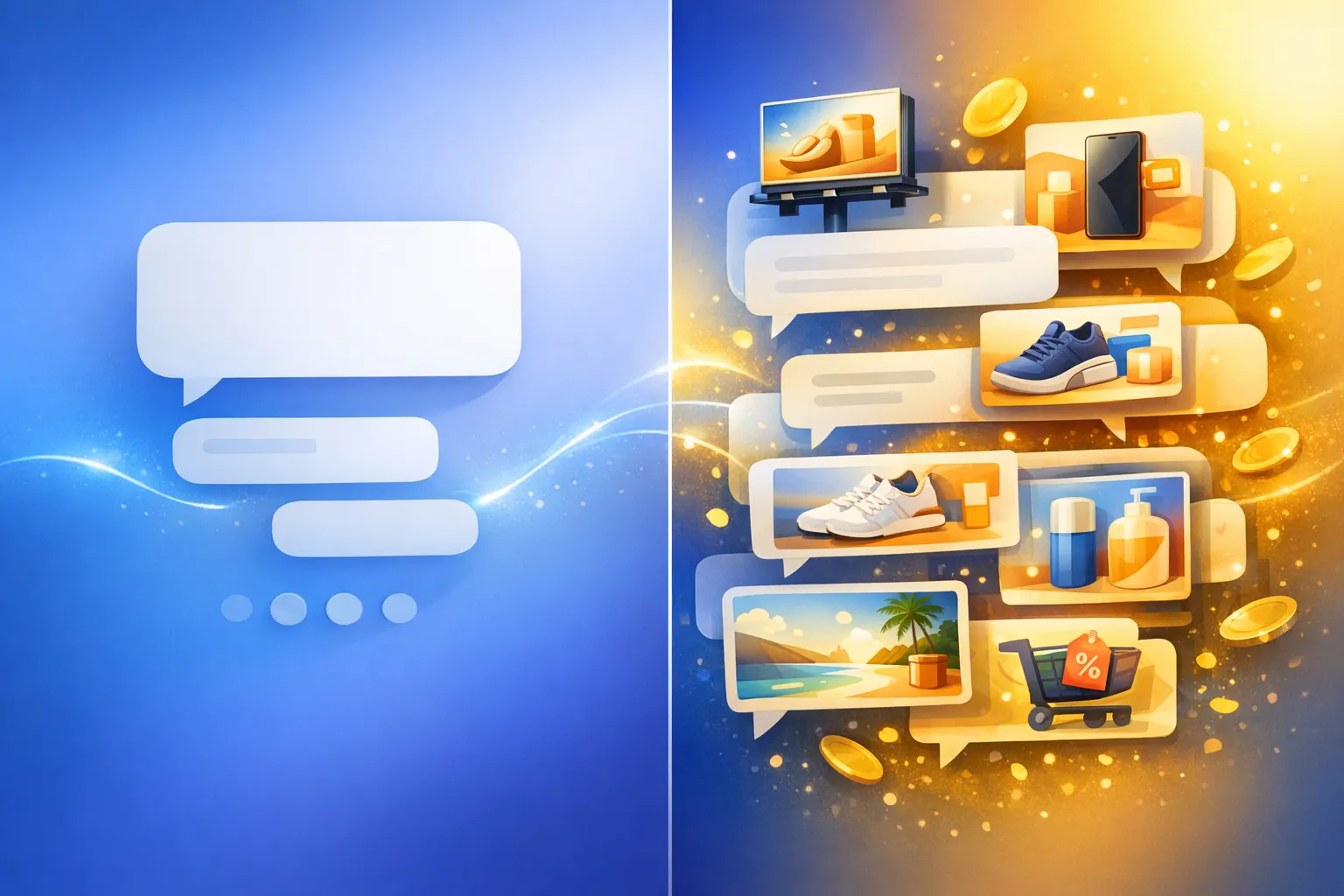
Five months ago, Google's VP of Search Dan Taylor said it plainly: "There are no ads in the Gemini app, and there are no current plans to change that."
On April 29, 2026, Google's Chief Business Officer Philipp Schindler said something very different on Alphabet's Q1 earnings call. When asked about monetizing the standalone Gemini app, Schindler told analysts Google is "open-minded about exploring the possibility of ads inside the Gemini app."
That single sentence wiped out months of positioning. The company that built a $240 billion advertising empire on search intent is now publicly flirting with putting ads inside its AI chatbot. And the context makes it even more significant: Google is already testing ad formats in AI Overviews and AI Mode within Search. Gemini was supposed to be the clean, ad-free alternative. Not anymore.
This is not a drill. This is the beginning of the AI chatbot advertising era, and Google just signaled it plans to compete aggressively with OpenAI's ChatGPT ad pilot, which generated over $100 million in annualized revenue in its first six weeks.
What Google Said Then vs. Now
The reversal is stark enough that it deserves a direct comparison.
December 2025 - Dan Taylor, VP of Google Search, during a press briefing:
"There are no ads in the Gemini app, and there are no current plans to change that."
That statement was widely reported and interpreted as Google drawing a clear line: Search gets ads, Gemini stays clean. The messaging aligned with Google's broader narrative that Gemini was a research and productivity tool, not a commercial surface.
April 29, 2026 - Philipp Schindler, Chief Business Officer, on the Q1 2026 earnings call:
When an analyst asked specifically about monetizing the standalone Gemini experience, Schindler responded:
"We're open-minded about exploring the possibility of ads inside the Gemini app."
He went further, framing potential ads not as interruptions but as "helpful commercial information" that would serve users. The language is telling. Google didn't say "we're considering it" or "we're evaluating options." They said "open-minded," which in earnings call parlance means the internal conversations are already well past the exploratory phase.
The shift happened in roughly five months. What changed?
Three things, all at once:
-
ChatGPT's ad pilot exploded. OpenAI's advertising experiment, launched in early 2026, hit $100M+ in annualized run rate within six weeks. That number got Google's attention immediately. When a competitor demonstrates that AI chatbot ads can generate nine-figure revenue in a month and a half, the "no plans to change that" stance becomes untenable.
-
AI Overviews testing proved the concept internally. Google has been running ad experiments inside AI Overviews and AI Mode for Search since late 2025. Those tests presumably showed enough positive signal on user engagement and advertiser demand to justify expanding the thinking to Gemini.
-
Pressure on Search growth. Alphabet's Q1 2026 results showed Search revenue at $50.7 billion, up 12% year-over-year. Solid, but Wall Street keeps asking where the next growth lever is. Gemini has hundreds of millions of users. Putting ads there is a multi-billion dollar opportunity that was sitting on the table.
What Google Is Already Testing
Before the Gemini comments, Google was already deep into AI-powered ad surfaces. Two products are actively running ad experiments.
AI Overviews Ads. When Google's search results display an AI-generated summary at the top, select users now see sponsored listings embedded within or adjacent to that summary. These ads look different from traditional search ads. They are designed to feel like part of the AI-generated answer, with clearer labeling but tighter integration into the informational content.
The format matters. Google is not just slapping AdWords above an AI summary. It is weaving commercial content into the fabric of the AI response itself. A user asking "best running shoes for flat feet" gets an AI Overview that synthesizes reviews, and within that synthesis, sponsored product recommendations appear as part of the answer.
AI Mode Ads. Google's AI Mode, the more conversational search experience launched in early 2026, is also testing ad placements. Here the dynamic is different because AI Mode operates more like a chatbot than a traditional search page. Ads need to feel native to a back-and-forth conversation, not like banner interruptions.
What Schindler described as "helpful commercial information" aligns with what these tests already show. The ads are formatted as recommendations, suggestions, or contextual commercial data within the AI's output. Not pop-ups. Not banners. Integrated, labeled commercial content.
The leap from "ads in AI Overviews" to "ads in Gemini" is not as large as it appears. The underlying ad-serving infrastructure and the user experience philosophy are the same. Gemini just extends the surface to a standalone app rather than a search feature.
The Competitive Landscape: ChatGPT Changed the Math
Google's Gemini ads pivot cannot be understood without looking at what OpenAI just accomplished.
In early 2026, OpenAI launched its ChatGPT advertising pilot with a select group of major brands. The results were extraordinary. According to Vogue Business's AI Tracker, the pilot generated over $100 million in annualized run rate within six weeks of launch.
Let that sink in. A brand-new advertising surface, in a product category that did not exist three years ago, hit $100M ARR in under two months. For context, it took YouTube over two years to reach $100M in ad revenue. Instagram took roughly the same.
OpenAI's scale compounds the opportunity. As of March 2026, ChatGPT has 900 million weekly active users and 50 million paid subscribers. Those numbers make it the largest AI chatbot by a wide margin. But Google's user base across Search, YouTube, and Gemini is even larger. If OpenAI can generate $100M+ ARR in weeks with its user base, Google's ceiling could be an order of magnitude higher.
The implications for the broader market are significant. We cover the full ChatGPT advertising ecosystem in our ChatGPT advertising glossary, and the competitive dynamics between Google and OpenAI's ad products in our ChatGPT Ads vs. Google Ads comparison.
The AI chatbot advertising market is now a two-horse race. Google has the ad infrastructure and the advertiser relationships. OpenAI has the user engagement and the first-mover proof of concept. Both are moving fast.
How Gemini Ads Will Probably Work
No official format has been announced yet. But based on what Google is testing in AI Overviews and AI Mode, and what ChatGPT's ad pilot looks like, we can make informed predictions about how Gemini ads will function.
Suggested products and services within conversational responses. When a user asks Gemini for recommendations (travel destinations, software tools, purchase decisions), the response will include labeled sponsored suggestions alongside organic recommendations. The ad is the suggestion, not a separate unit.
Contextual commercial modules. For queries with clear commercial intent, Gemini may display structured product or service cards within its response. Think of them as mini-shopping results embedded in the AI answer, complete with pricing, ratings, and click-through links.
Follow-up ad opportunities. After a conversation reaches a commercial decision point (e.g., "Which CRM should I use?"), Gemini could offer a follow-up like "Here are some sponsored options to explore" as a natural conversational pivot.
Brand-safe, labeled, and opt-in. Given the scrutiny AI products face, Google will likely be aggressive about labeling and transparency. Every ad placement will be clearly marked. Brands will probably have some control over the conversational contexts in which their ads appear.
Performance-based pricing. Google's DNA is performance advertising. Expect cost-per-click and cost-per-acquisition models, not CPM brand awareness plays, at least initially. The data advantage Google has here is enormous: it knows what users searched for, what they clicked, what they bought, and what they came back to. That intent graph applied to AI conversations is a targeting system no competitor can match.
The key insight: Gemini ads will not look like search ads. They will look like part of the conversation. And that is exactly what makes them both valuable and potentially unsettling for users accustomed to ad-free AI chatbot experiences.

What This Means for Brands: The AI Chatbot Ad Ecosystem
The emerging AI chatbot advertising ecosystem has three layers that brands need to understand.
Layer 1: AI-enhanced search ads. This is already live. Google's AI Overviews and AI Mode ads, Microsoft's Copilot search ads, and Perplexity's sponsored follow-up questions. These are search ads evolved to work within AI-generated results. If you are running Google Ads today, you are already participating in this layer whether you realize it or not.
Layer 2: Standalone AI chatbot ads. This is the ChatGPT ad pilot and the soon-to-come Gemini ads. Ads inside conversational AI products that are not search engines. The user experience is fundamentally different because the interaction model is dialogue, not query. Ad formats, targeting, and measurement will all be different from what performance marketers are used to.
Layer 3: AI agent commerce. This is the future layer, where AI agents make purchases on behalf of users. When your AI assistant books a flight, orders groceries, or subscribes to a SaaS product, the brand that gets selected may depend on who paid for placement in the agent's decision framework. We explore this in our agentic commerce glossary.
For brands, the practical implication is that the advertising playbook is being rewritten in real time. The AI search statistics show that AI-powered search is growing at 35%+ year-over-year, and traditional search is plateauing. The audiences are shifting. The ad surfaces are shifting with them.
Why this matters specifically for Gemini:
Google controls the largest advertising infrastructure on the planet. Its Google Ads platform serves millions of advertisers across Search, YouTube, Display, Shopping, and Performance Max. When Gemini ads launch, they will plug into that existing infrastructure. Brands already running Google Ads campaigns could potentially extend to Gemini with minimal setup, the same way they extend to YouTube or Discover.
This is Google's unfair advantage over OpenAI. ChatGPT ads require building advertiser relationships and campaign infrastructure from scratch. Gemini ads inherit an ecosystem that has been refined for two decades.
Why Brands Should Prepare Now
First-mover advantage in new advertising surfaces is consistently disproportionate. The brands that figured out Google AdWords in 2001, Facebook Ads in 2008, and TikTok Ads in 2020 all captured outsized returns before those markets matured and CPMs rose.
AI chatbot ads are at that same early stage right now.
Here is what brands should be doing today to prepare:
Audit your AI visibility. Before you advertise in AI chatbots, understand how your brand currently appears in AI-generated responses across Google, ChatGPT, Perplexity, and other AI surfaces. If your brand is not showing up organically in AI answers, paid placements in Gemini will be fighting an uphill battle. Run a comprehensive AI visibility audit to establish your baseline.
Build conversational creative assets. AI chatbot ads require a different creative approach than search or social. The ad is embedded in a conversational response, so the copy needs to feel natural, helpful, and contextually appropriate. Start developing creative libraries designed for dialogue, not display.
Understand the intent mapping. In traditional search, keywords map to intent. In AI chatbots, entire conversations map to intent. The targeting is conversational, not keyword-based. Brands need to understand the decision journeys users take in AI chatbots and where along those journeys their products become relevant.
Allocate experimental budget. Not production budget. Experimental. Set aside 5-10% of your digital advertising budget for AI chatbot ad experiments across ChatGPT and, when it launches, Gemini. The goal is learning, not scale. Understand the performance characteristics, the user sentiment, and the creative requirements before the market gets crowded.
Monitor the competitive landscape weekly. This space is moving faster than any advertising channel in history. ChatGPT went from "no ads" to "$100M ARR" in six weeks. Google went from "no plans for Gemini ads" to "open-minded" in five months. The brands that win will be the ones paying attention.
Google's own actions underscore the urgency. The day before Schindler's Gemini comments, Google announced AI Max expansion for Shopping and Travel keyword targeting, another signal that the company is rapidly evolving its AI ad surfaces across every product.
The Bigger Picture
Google's reversal on Gemini ads is not really about Gemini. It is about the structural shift in how people find information and make decisions.
When Dan Taylor said Gemini would stay ad-free in December 2025, he probably meant it. But six weeks of ChatGPT ad revenue data and internal AI Overviews testing convinced Google's business leadership that the opportunity was too large to leave on the table. The pivot was not a strategy change. It was a data-driven response to a market that moved faster than anyone expected.
For brands, the message is clear: AI chatbots are becoming advertising surfaces. Not might become. Are becoming. Google and OpenAI, the two largest AI companies on the planet, are both actively building ad products for their chatbots. The infrastructure is being assembled now. The inventory will open soon.
The brands that start preparing today will be the ones running profitable campaigns when the market matures. The ones that wait will be bidding against established competitors in an auction they do not understand.
Ready to understand your brand's AI visibility before the ad market opens? Get a comprehensive audit of how your brand appears across AI chatbots, AI Overviews, and AI-powered search. Start your free AI visibility audit today.
Sources
- Alphabet Q1 2026 Earnings Call, Philipp Schindler comments on Gemini monetization, April 29, 2026
- Business Standard, "Google is now open to exploring inclusion of ads in Gemini app," May 1, 2026
- Android Headlines, "Google Signals Possible Ads in Gemini AI Platform," April 30, 2026
- PhoneArena, "Remember when Google said Gemini would stay ad-free?" May 1, 2026
- Yahoo Tech, "Ads aplenty: Google exec puts ads in Gemini back on our minds," May 2, 2026
- Dan Taylor, VP of Google Search, statement on Gemini ads, December 2025
- CNBC, Alphabet Q1 2026 earnings coverage and revenue breakdown, April 29, 2026
- Vogue Business AI Tracker, ChatGPT advertising pilot data ($100M+ ARR), May 1, 2026
FAQ
Will Gemini ads look like Google Search ads? No. Based on Google's AI Overviews testing and ChatGPT's ad formats, Gemini ads will be integrated into conversational responses as labeled recommendations or suggestions, not traditional search ad units with headlines and descriptions.
When will Gemini ads actually launch? Google has not announced a timeline. Schindler's "open-minded" comment on the April 2026 earnings call suggests the company is in active planning but not yet ready for a public launch. Based on the pace of AI Overviews ad testing, a pilot could appear within 3-6 months.
How is this different from ChatGPT ads? The core difference is infrastructure. Google has 20+ years of advertiser relationships, targeting data, and campaign management tools. ChatGPT ads are built on newer infrastructure with fewer advertisers but faster adoption. Google's advantage is scale and maturity; OpenAI's advantage is first-mover proof of concept and massive user engagement.
Will Gemini ads be available to all advertisers immediately? Almost certainly not. Google typically launches new ad surfaces with a limited pilot before expanding. Expect an initial rollout to large advertisers and Performance Max campaigns, with broader availability following based on performance data.
How much should brands budget for AI chatbot advertising? During the experimental phase (2026), allocate 5-10% of digital advertising budget to AI chatbot ads across ChatGPT and Gemini. The goal is learning, not volume. Once performance benchmarks are established, budgets can scale based on actual ROAS data.
Does this mean the end of ad-free AI chatbots? For the major consumer chatbots, yes. Both Google and OpenAI are now publicly committed to advertising as a monetization path. Smaller or specialized AI tools may remain ad-free, but the two largest chatbots by user count will have ads. The question is not whether but how fast and how intrusive the formats become.
Looking for a complete AI visibility strategy? Explore Searchless.ai pricing plans to find the right audit and monitoring package for your brand.
How Visible Is Your Brand to AI?
88% of brands are invisible to ChatGPT, Perplexity, and Gemini. Find out where you stand in 60 seconds.
Check Your AI Visibility Score Free