AI Visibility: Why Recommendation Share Is Becoming More Important Than Rankings
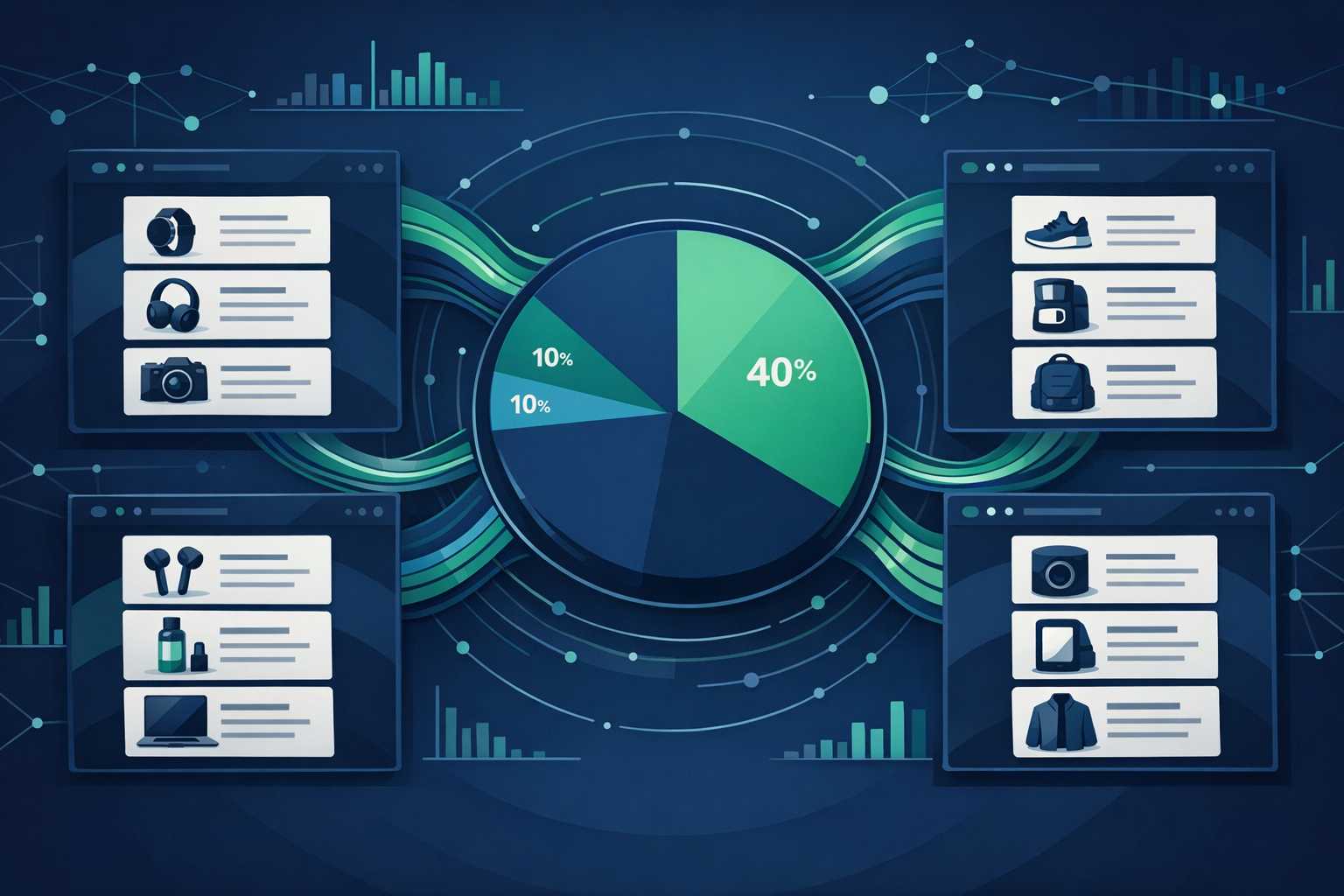
The mistake most operators make is treating AI visibility as if it were just another rank metric.
That instinct is understandable. Two decades of search trained marketers to think in terms of positions, impressions, and click-through rates. When a new discovery layer arrives, the reflex is to measure it the same way: am I showing up, how often, and where?
But AI systems do not work like search engines. They do not return ranked lists. They generate answers. They recommend options. They make decisions on behalf of users. In that model, the question is not only whether you appear in a list. The question is whether AI systems understand, cite, and recommend your brand when it is relevant.
That is what AI visibility actually measures. It is not a single metric. It is a multi-dimensional performance surface that captures how discoverable and recommendable you are across AI answer engines, recommendation systems, and agentic workflows.
Understanding that distinction is becoming commercially critical. The brands that optimize for AI visibility will have a structural advantage in the post-search economy. The ones that keep chasing rank metrics alone will find themselves increasingly invisible to the systems that are mediating discovery.
What AI visibility actually measures
AI visibility measures three things that search visibility never did.
Citation share. How often AI engines choose to reference your brand, pages, or claims when synthesizing answers. A page can rank well on Google and still never be cited by ChatGPT, Perplexity, or Google AI Overviews. Another page can be cited consistently across multiple engines even when its traditional ranking is not top-10. That gap is where AI visibility starts.
Recommendation representation. How often your brand appears in AI-generated recommendations, whether for products, tools, services, or solutions. This matters in commercial-intent contexts where users ask "what should I buy?" or "which tool is best?" The engine is not returning a ranked list. It is making a recommendation. Your presence in that recommendation set is a visibility metric that rank tracking cannot capture.
Prompt-class coverage. How well you are represented across different types of user prompts and intent classes. Some engines cite you for informational queries but ignore you for commercial ones. Some mention you in research prompts but miss you in transactional workflows. AI visibility measures whether you are visible across the full spectrum of intent, not just the queries you happen to rank for today.
These dimensions exist in parallel to traditional search metrics, not as a replacement. Strong search performance still matters. But as AI engines become primary discovery channels, search visibility alone is no longer sufficient.
Why AI visibility is different from traditional SEO
The old model was built on a simple premise: users type queries, engines return ranked lists, advertisers bid on positions. Visibility meant appearing in the list, ideally near the top.
The new model is different. Users express intent through conversation, agents act on their behalf, and systems generate answers instead of lists. In that world, visibility is not about position. It is about whether the system recognizes your brand as a valid answer and includes it in the response.
Conductor's 2026 AEO and GEO benchmark makes this shift explicit. The report shows AI referral traffic accounting for a little over 1% of total visits for some platforms, but driving 12% of signups. That conversion rate gap is not a mistake. AI engines are surfacing brands to users who are further along the decision path, even when the absolute traffic volume is still lower than traditional search.
Webflow reported an even more dramatic difference: ChatGPT traffic converted at 24% compared to 4% for Google — a 6x higher conversion rate. The implication is clear. AI engines are not just another traffic source. They are a different discovery surface with different user behavior, different intent patterns, and different visibility rules.
The practical difference shows up in three ways.
Citation behavior is not the same as ranking behavior. A page can rank first on Google for a query and never be cited by an AI engine. Another page can be cited consistently across multiple AI engines even when its traditional ranking is mediocre. The reasons for that gap — content structure, evidence quality, clarity of definition, methodology transparency — are not captured by rank tracking.
Recommendation share matters more than click share in AI-first journeys. When a user asks an AI system "which project management tool should I use for a remote team?" the system does not return ten results and wait for a click. It recommends one or two options. Being in that recommendation set is the visibility moment. Whether the user clicks afterward is secondary. Traditional metrics focused on clicks. AI visibility focuses on being the recommendation.
Prompt-class coverage creates hidden gaps. Search teams often optimize for the queries they can track. AI visibility reveals whether you are represented across the full spectrum of intent. A SaaS company might be visible when users ask "what is [tool] used for?" but invisible when they ask "which [tool] is best for [use case]?" That gap does not show up in rank reports. It shows up when you measure prompt-class coverage across AI engines.
The three dimensions of AI visibility
AI visibility is not one number. It is a surface with three measurable dimensions.
Citation share
This is the most direct measure of how often AI engines choose your content as a source. It answers the question: when AI systems generate answers in my category, how often do I contribute to those answers?
Citation share matters because it is the foundation of answer-layer influence. If your pages are not being cited, they are not shaping the answers users receive. Even if you have strong rankings and healthy organic traffic, you are invisible to the AI-mediated discovery layer.
The pattern that drives citation share is becoming clearer. Engines prefer pages with direct definitions, structured evidence, visible methodology, and clean comparatives. They reward source fit — using the right kind of page for the question — not just authority. A methodology page can outperform a generic blog post when the system needs definitional trust. A comparison page can matter more on evaluator queries than a vague category article.
Recommendation representation
This measures how often your brand appears in AI-generated recommendations for products, tools, services, or solutions. It answers the question: when users ask for recommendations in my category, how often am I included?
This is where commercial intent and AI visibility intersect. Traditional search advertising was built on the premise that users would browse results and click. AI recommendation systems shortcut that process. They evaluate options and present the most relevant ones directly.
For SaaS companies, this changes the discovery funnel. A user asking ChatGPT "which CRM is best for a small B2B team?" does not see ten CRM landing pages. They see a shortlist of two or three options, with reasons. Being in that shortlist is the new visibility moment. The click that follows is a secondary conversion.
Prompt-class coverage
This measures how well you are represented across different types of user intent. It answers the question: am I visible when users ask about me in different ways?
Search teams often optimize for explicit brand queries and high-intent commercial keywords. AI visibility reveals gaps across the full spectrum. A brand might be visible for "what is [product] used for?" but invisible for "how does [product] compare to [competitor]?" They might show up for informational prompts but miss transactional ones.
This matters because AI engines do not only surface brands when users search for them directly. They surface brands when users describe problems, use cases, or desired outcomes. If your content and positioning do not map to those descriptions, you will be invisible to the recommendation layer even when you are the best fit.
Why AI visibility is becoming a performance category now
Three market signals are converging to make AI visibility a recognized performance category.
Google's own data on AI Overviews. Google reported that AI Overviews now appear on approximately 82% of eligible queries, up from a smaller share in 2025. The company also reported a 91% accuracy rate for properly grounded responses. When the dominant search engine is generating AI answers for the vast majority of queries, measuring answer-layer visibility is no longer optional.
The Conductor benchmark. The 2026 AEO and GEO benchmark is the clearest market signal that AI visibility is being treated as a distinct performance category. The report explicitly frames AI as creating a "parallel surface of visibility where brands are seen inside AI answers before anyone clicks." That language breaks the old assumption that visibility starts with the ranked link.
Enterprise adoption and agency services. Agencies and consultancies are already building AI visibility offerings. Semrush has normalized AI visibility as a core marketing stack component. Webflow has productized AEO workflows. Hubspot launched an AEO grader. When major platforms and agencies start measuring and selling AI visibility as a service, the category is no longer theoretical.
The combination is powerful. The dominant search engine is deploying AI answers at scale. The benchmarking community is treating AI visibility as a separate metric. The agency ecosystem is building services around it. The market has effectively declared that AI visibility is real, measurable, and commercially valuable.
How AI visibility measurement differs from rank tracking
The operational difference matters. Traditional rank tracking answers questions like: where do I appear for this keyword? What is my position? How has it changed over time?
AI visibility measurement answers different questions: which AI engines cite me? Which prompt classes trigger inclusion? How often am I recommended versus my competitors? How does my visibility vary by engine, by intent, by time?
These questions require different tools and different workflows. Rank trackers crawl search results and record positions. AI visibility measurement needs to query AI engines directly, capture the answers, and analyze citation patterns, recommendation sets, and prompt-class coverage. It is bot extraction, not rank scraping.
The output is also different. Instead of a list of positions and movement, you get a visibility profile: which engines cite you, for which prompts, how often, and in what context. That profile reveals gaps that rank tracking cannot see.
A brand might have strong rankings for "project management software" but zero AI visibility for "which tool is best for remote teams." Another brand might have mediocre rankings but strong recommendation representation across multiple AI engines. Both profiles are invisible to rank tracking alone.
The strategic value of owning the AI visibility definition
The market is still in the early stages of defining what AI visibility means and how to measure it. That creates an opportunity for brands that move fast to own the category.
Searchless's position is that AI visibility is a multi-dimensional performance surface measuring citation share, recommendation representation, and prompt-class coverage across AI engines and agentic workflows. That definition is useful because it captures what actually matters in the post-search discovery environment.
Brands that adopt that definition early will have several advantages. They will ask better questions about their measurement stack. They will build content optimized for citation and recommendation, not just ranking. They will allocate budget to AI visibility work before competitors treat it as a serious performance category.
The alternative is to wait until the category is fully mature and then try to catch up. By then, the brands that invested early will have built the glossary pages, methodology assets, benchmark data, and internal expertise that make AI visibility a measurable, manageable part of their growth strategy.
What operators should do differently
Once you accept that AI visibility is a distinct performance category, the workflow changes in three ways.
Measure it directly. Do not infer AI visibility from rank data or traffic patterns. Use tools that query AI engines directly and capture citation and recommendation patterns. Track which engines cite you, for which prompts, and how that changes over time.
Build source-fit content. Create pages that AI engines can actually use: direct definitions for glossary terms, methodology pages for trust, benchmark pages for proof, comparison pages for evaluator intent. Different query classes need different answer-ready assets.
Optimize for prompt-class coverage. Map the full spectrum of user intent in your category, not just the explicit brand and commercial keywords you track today. Identify where you are invisible to AI recommendation even when you are the best fit, and build content that closes those gaps.
The connection to broader strategy
AI visibility is not an isolated optimization layer. It connects to the broader shift from search-based discovery to AI-mediated discovery.
Google's replacement of Dynamic Search Ads with AI Max is another signal. When the company that built its business on keyword auctions tells advertisers that "simply pulling text from a website isn't enough anymore," it is acknowledging that content alone does not determine visibility. AI interpretation determines visibility.
The same logic applies to organic discovery. AI engines do not only match content to queries. They interpret intent, evaluate trust, assess evidence quality, and synthesize responses from multiple sources. Brands that optimize for that process will have a structural advantage as every major platform completes its own transition from keyword-matching to AI interpretation.

The strategic takeaway
AI visibility is not just another rank metric. It is a multi-dimensional performance surface that measures how discoverable and recommendable your brand is across AI answer engines, recommendation systems, and agentic workflows.
The market is already treating it as a distinct performance category. Google is deploying AI answers at scale. Benchmarks are measuring it. Agencies are selling it. The only question is whether brands will treat it as a serious part of their growth strategy before their competitors do.
The brands that optimize for AI visibility will shape the answers users receive, appear in the recommendations they rely on, and be represented across the full spectrum of user intent. The ones that keep chasing rank metrics alone will find themselves increasingly invisible to the systems that are mediating discovery.
That is the choice.
Run the audit: audit.searchless.ai
Sources
- Conductor, The 2026 AEO / GEO Benchmarks Report, 2026
- GTM Strategist, "AEO: How to Make AI Recommend Your Product," Ahrefs/Webflow conversion data, 2026
- Google, AI Overviews documentation and performance data, March 2026
- Search Engine Land, "Generative engine optimization (GEO): How to win AI mentions," 2026
- Searchless, internal research on AI citation patterns and prompt-class coverage, 2026
FAQ
Is AI visibility the same as SEO?
No. SEO optimizes for search engine rankings and clicks. AI visibility optimizes for citation share, recommendation representation, and prompt-class coverage across AI answer engines. The two are related but distinct performance categories.
Why does recommendation share matter more than click share in AI-first journeys?
Because AI engines often make recommendations directly instead of returning ranked lists. Being in the recommendation set is the visibility moment. The click that follows is a secondary conversion.
How do I measure AI visibility?
Use tools that query AI engines directly and capture citation and recommendation patterns. Track which engines cite you, for which prompts, and how that changes over time. Do not infer AI visibility from rank data or traffic patterns.
For the glossary definition, see AI visibility. For methodology, see how Searchless measures AI visibility.
How Visible Is Your Brand to AI?
88% of brands are invisible to ChatGPT, Perplexity, and Gemini. Find out where you stand in 60 seconds.
Check Your AI Visibility Score Free