The Grounding Problem: Why AI Models Still Struggle with Attribution
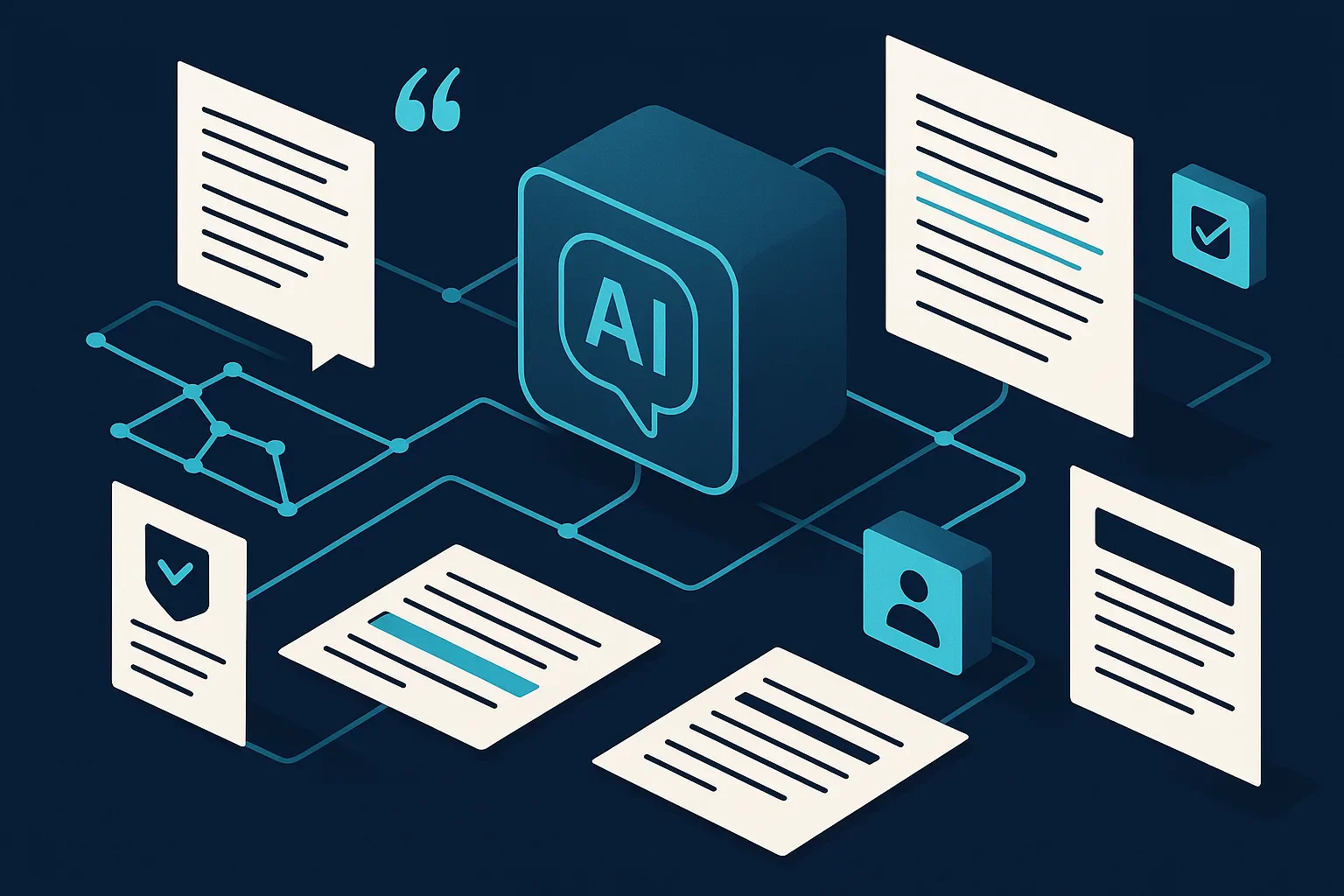
Six months after widespread adoption of AI-powered search, one fundamental problem persists: grounding. The ability to connect AI-generated statements to reliable, verifiable sources remains imperfect. The result is a search ecosystem where confidence and uncertainty coexist in uneasy tension.
Grounding refers to the process of connecting an AI's claims to specific evidence. When a model states that coffee consumption reduces heart disease risk, grounding means identifying the study or studies that support that claim. When an AI recommends a specific product, grounding means locating reviews, tests, or other evidence that justify the recommendation. The goal is not just accuracy but traceability. Every claim should lead back to a source that can be examined and verified.
The technical challenges of grounding are substantial. AI models generate text based on patterns learned from training data. They do not store specific sources or citations in a way that can be reliably retrieved. When a model produces a claim, it cannot always explain where that claim came from. The knowledge is embedded in the model's weights rather than explicitly linked to sources. This creates a fundamental disconnect between generation and attribution.
Different AI platforms approach grounding differently. Perplexity has made robust attribution a core feature of its platform. The system automatically searches for sources before generating answers, then builds citations directly into the response. This approach provides clear attribution but can slow down response times. It also limits the model to information that exists in indexed sources, potentially missing insights from private data or unpublished research.
ChatGPT's approach to grounding has evolved significantly. Early versions provided no attribution at all, leading to criticism about unverifiable claims. Current versions include citations where available, but the quality varies. Some answers include thorough source lists. Others provide minimal or no attribution. This inconsistency reflects the technical difficulty of implementing comprehensive grounding across the full range of queries the platform handles.
DeepSeek emphasizes speed over thorough grounding. The platform provides minimal source attribution, prioritizing quick answers over comprehensive verification. This approach appeals to casual users but limits adoption among professionals and researchers who require traceable claims. The platform is experimenting with improved grounding but faces the same technical challenges as competitors.
The grounding problem manifests in several specific ways. AI engines sometimes cite sources that do not actually support the claims made. Other times, citations link to paywalled content or broken URLs. In some cases, the cited source exists but has been superseded by newer research. Even the best grounding systems struggle with these issues, creating gaps between apparent attribution and actual verification.
Content creators face new challenges in a world where grounding matters. Traditional SEO focused on making content discoverable through keywords and links. GEO requires making content extractable and citable. This means structuring information in ways that AI systems can parse and attribute accurately. Clear statements, proper citations, and well-organized data all improve the likelihood of being cited correctly.
The quality of source material matters more than ever in the grounding era. AI engines prioritize authoritative sources over obscure ones. Studies published in peer-reviewed journals get cited more frequently than blog posts. Official government data outranks user-generated content. This creates both opportunities and challenges. Established brands with strong authority benefit from this bias. Newer voices without established credentials struggle to break through.
The reliability of grounding systems varies significantly by domain. Technical and scientific topics tend to have better grounding because the information is more structured and verifiable. Creative and opinion-based content proves more challenging because it lacks clear factual claims to ground. Medical and legal queries require particularly rigorous grounding due to the high stakes of misinformation. Different domains require different approaches to attribution.
AI engines are developing more sophisticated grounding techniques. Some now track the provenance of specific claims through multiple layers of information. Others use retrieval-augmented generation to dynamically fetch relevant sources during answer generation. Advanced systems can distinguish between well-supported claims and speculative statements, providing appropriate attribution for each. These technical improvements are gradually reducing the grounding gap.
The user experience of imperfect grounding creates confusion. Users see citations and assume verification, not realizing that citations can be incomplete or inaccurate. Some users click through to sources only to find they do not actually support the claims. Others place excessive trust in AI-generated answers because the citations make them appear authoritative. This creates risks of misinformation despite the presence of attribution mechanisms.
The economic implications of grounding are significant. Brands that get cited effectively gain visibility and authority without paying for advertising. Content creators whose work gets incorporated into AI answers benefit from exposure but may not receive direct compensation. Publishers face difficult decisions about whether to allow AI crawling and citation. The entire ecosystem is still figuring out the right balance between openness and control.
Regulatory attention is increasingly focused on grounding issues. The European Union's AI Act includes provisions about transparency and attribution for AI-generated content. United States regulators are examining whether current consumer protection laws extend to AI search results. These oversight efforts will likely shape how AI platforms implement grounding features going forward.
The research community is actively developing better grounding methods. New techniques for tracking information through neural networks are emerging. Improved retrieval systems can find more relevant sources more efficiently. Better verification algorithms can check whether sources actually support the claims they are cited for. These advances will gradually improve the quality of AI attribution.
The gap between human and machine understanding of evidence remains a fundamental challenge. Humans evaluate sources based on credibility, relevance, and recency. AI systems struggle to make these nuanced judgments. A source might be technically accurate but misleading due to context or cherry-picking. AI systems can cite the source without recognizing this limitation. This creates situations where technically correct citations still lead to incorrect conclusions.
The future of grounding will likely involve hybrid systems that combine automated and human verification. Critical domains like healthcare and finance may require human review of AI-generated answers before they reach users. Educational contexts might use AI systems for initial research but insist on manual source verification. The right approach will vary by context and risk tolerance.
Organizations using AI search need to develop grounding awareness. This means understanding the limitations of citation systems and training users to verify important claims independently. It means implementing policies about when AI-generated answers can be trusted and when they require human review. It means maintaining appropriate skepticism even when citations appear comprehensive.
The technical community is exploring several promising directions for improving grounding. Better entity linking can connect claims to specific people, organizations, and concepts. Improved temporal reasoning can track how facts change over time and ensure citations reflect current knowledge. Enhanced source verification can check whether cited sources actually exist and are accessible. These technical improvements will gradually reduce the grounding gap.
The user experience of grounding continues to evolve. Early implementations showed citations as simple lists of links. Current systems provide more context, explaining what role each source played in the answer. Future implementations may show confidence scores for different claims or highlight areas where verification is uncertain. The goal is to provide users with enough information to make informed judgments about reliability.
The business opportunity around grounding is emerging. Companies that specialize in verifying AI-generated claims are appearing. Tools that help organizations track how their content gets cited are being developed. Services that audit AI systems for grounding quality are gaining traction. The market for these solutions will grow as organizations become more dependent on AI-powered information discovery.
The ethical dimensions of grounding deserve careful consideration. When AI systems make incorrect claims with apparent citation support, who bears responsibility? How should platforms communicate uncertainty to users? What are the obligations of source creators when their content gets incorporated into AI answers? These questions do not have easy answers but require ongoing attention.
The progress in grounding over the past year has been substantial but uneven. Some queries now receive nearly perfect attribution with comprehensive, accurate citations. Other queries still struggle with incomplete or misleading source attribution. The variation depends on domain complexity, source availability, and query specificity. Users need to develop intuition about which types of queries can be trusted and which require additional verification.
The evolution of grounding capabilities will likely follow a pattern similar to other AI features. Early versions will be imperfect but useful. Continuous improvements will gradually address the most serious issues. Specialized domains will achieve high performance before general-purpose systems. The transition from experimental to mainstream will happen gradually rather than in a single breakthrough.
For now, the grounding problem remains a central challenge in the AI search ecosystem. The gap between what AI systems claim and what they can verify creates both opportunities and risks. Organizations and individuals who understand this gap can use AI tools effectively while maintaining appropriate skepticism. Those who ignore grounding limitations risk making decisions based on incomplete or incorrect information.
The next year will likely see significant improvements in grounding quality. Technical advances will reduce the frequency of incorrect or missing citations. Better user interfaces will make uncertainty more visible. Industry standards will establish expectations for attribution quality. These developments will gradually transform grounding from a persistent problem into a manageable feature of the AI landscape.
Until then, grounding remains the frontier where AI promise meets practical limitation. The ability to generate sophisticated answers outpaces the ability to verify those answers. This tension defines the current state of AI search and will continue shaping how we think about artificial intelligence and its role in information discovery.
How Visible Is Your Brand to AI?
88% of brands are invisible to ChatGPT, Perplexity, and Gemini. Find out where you stand in 60 seconds.
Check Your AI Visibility Score Free