AI Overviews Source Selection Is a Ranking Layer Now — Not a SERP Feature
For most of SEO history, the deal was simple: rank on page one, get traffic. The structure of the results page barely mattered beyond position. Then AI Overviews arrived, and the assumption was that they would just summarize whatever already ranked at the top. That assumption is now demonstrably wrong.
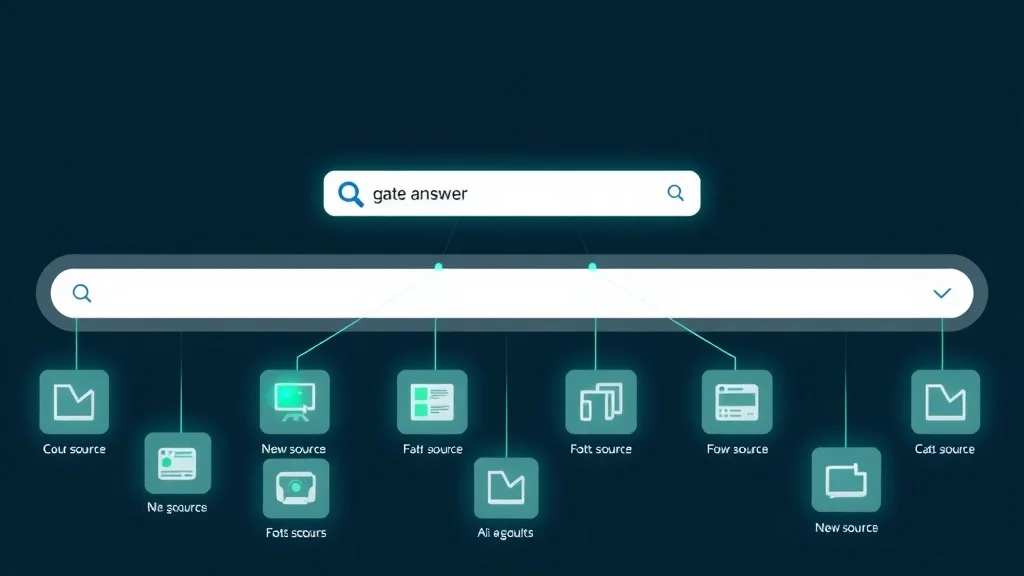
Google's AI Overviews operate a source selection process that functions as an independent ranking layer. The sources cited in AI Overviews are not simply the top organic results repackaged into a summary. They are selected through a separate retrieval and evaluation pipeline that weighs different signals than traditional ranking. This means a page can rank first organically and still never appear in an AI Overview. Conversely, a page ranking eighth can dominate AI Overview citations if it aligns with what the selection layer rewards.
Understanding this shift changes how GEO and SEO work together — and where they diverge.
What the Source Selection Layer Actually Does
When a user submits a query that triggers an AI Overview, Google does not simply feed the top 10 organic results into a language model and ask for a summary. Instead, a multi-stage pipeline kicks in.
First, a retrieval pass identifies candidate sources. This pass considers a broader pool than the visible organic results. Pages ranking anywhere on page one or two can enter the candidate set. In some cases, pages beyond page two make the cut if they match specific entity or topical signals the selection layer deems relevant.
Second, a filtering stage evaluates candidates against criteria that overlap with — but are not identical to — organic ranking factors. Content structure, factual specificity, directness of answer, and schema markup all carry weight. Authoritative signals matter, but they are weighted differently. A page from a lesser-known domain with highly specific, well-structured content can outrank a generic page from a major publisher in the citation set.
Third, the generation model synthesizes an answer and attaches citations. The citations reflect which sources the model actually drew from, not which sources ranked highest. This is the critical disconnect: the model's synthesis step introduces its own preferences for certain content formats, writing styles, and information density.
The Data Behind the Disconnect
Analysis of AI Overview citations across thousands of queries reveals consistent patterns. Roughly 30-40% of cited sources do not match the top organic positions. In informational queries — the type most likely to trigger AI Overviews — the divergence is even higher. Pages ranking in positions 4-8 are cited more frequently than pages in positions 1-3 for certain query categories, particularly those involving comparisons, definitions, and how-to explanations.
This happens because the source selection layer rewards different things than the organic ranking algorithm. Organic rankings heavily weight link authority, domain trust, and user engagement signals. Source selection for AI Overviews weights content precision, structural clarity, and the presence of directly extractable answers.
A page that says "The best strategy for reducing SaaS churn is to implement predictive analytics that flag at-risk accounts 30 days before renewal" will get cited over a page that spends 500 words discussing the history of churn before arriving at the same conclusion. The selection layer optimizes for extraction efficiency.
How to Optimize for the Source Selection Layer
The implication for GEO strategy is clear: traditional SEO alone will not maximize AI Overview visibility. You need to optimize specifically for the selection layer.
Lead with the answer. The first paragraph of any page targeting AI Overview citations should contain the core answer in a direct, self-contained sentence. Context, history, and nuance should come after. This is the opposite of what most content marketing teaches, but it aligns with how the extraction pipeline identifies candidate passages.
Structure for extractability. Use clear heading hierarchies, short paragraphs, and explicit definitions. The selection layer favors content that can be cleanly segmented into discrete factual units. Long, flowing paragraphs with embedded context are harder to extract and less likely to be cited.
Build topical authority, not just domain authority. The source selection layer appears to evaluate topical depth. A site with 50 deeply-researched articles on a specific subject area is more likely to be cited than a site with one viral post, even if the viral post has more backlinks. This suggests that content velocity and topical coverage patterns matter more for AI Overview visibility than raw link metrics.
Use comparison tables and structured data. When the AI Overview pipeline evaluates candidates for comparison queries, it shows a strong preference for pages containing structured comparison content. Tables, spec lists, and feature-by-feature breakdowns are highly extractable. Schema markup that explicitly labels this content increases the odds of selection.
Match the query's intent format. If a query asks "what is X," the selection layer looks for definitional content. If a query asks "how to do X," it looks for step-by-step content. If a query asks "X vs Y," it looks for comparative content. Pages that match the query's format expectation get cited more often than pages that cover the topic but in a different format.
The Measurement Problem
Tracking AI Overview visibility is fundamentally different from tracking organic rankings. Position-based tracking tools are insufficient because they measure where you appear in organic results, not whether you appear in citations. And since citations can vary between users, sessions, and even query refinements, single-point measurement is unreliable.
The brands building genuine AI Overview visibility have moved to citation tracking — monitoring how often they appear as a cited source across a representative set of queries over time. This requires querying AI Overviews repeatedly, logging cited domains, and tracking changes in citation frequency. It is more expensive than rank tracking, but it measures the thing that actually matters.
The brands that haven't made this shift are still optimizing for a SERP that increasingly doesn't represent where their audience finds them.
What This Means for Content Strategy
The source selection layer is not going away. As AI Overviews expand to cover more query types and as Google deepens the integration between its language models and search infrastructure, the gap between organic ranking and AI citation will widen further.
Content teams need to think in terms of dual optimization. Traditional SEO still drives organic traffic, particularly for navigational and transactional queries where AI Overviews are less likely to appear. But for informational queries — the top-of-funnel content that builds brand awareness and establishes expertise — AI Overview citations are the new battleground.
The content that wins organic rankings and the content that wins AI citations share DNA, but they are not identical. Understanding the difference, and building a content engine that serves both, is the core challenge of GEO in 2026.
The brands that treat source selection as an independent layer — with its own rules, its own measurement, and its own optimization playbook — will build visibility that compounds. The brands that assume organic rankings will carry over into AI citations are watching their share of voice quietly erode.
How Visible Is Your Brand to AI?
88% of brands are invisible to ChatGPT, Perplexity, and Gemini. Find out where you stand in 60 seconds.
Check Your AI Visibility Score Free