How ChatGPT Is Starting to Choose App Recommendations Before the App Store
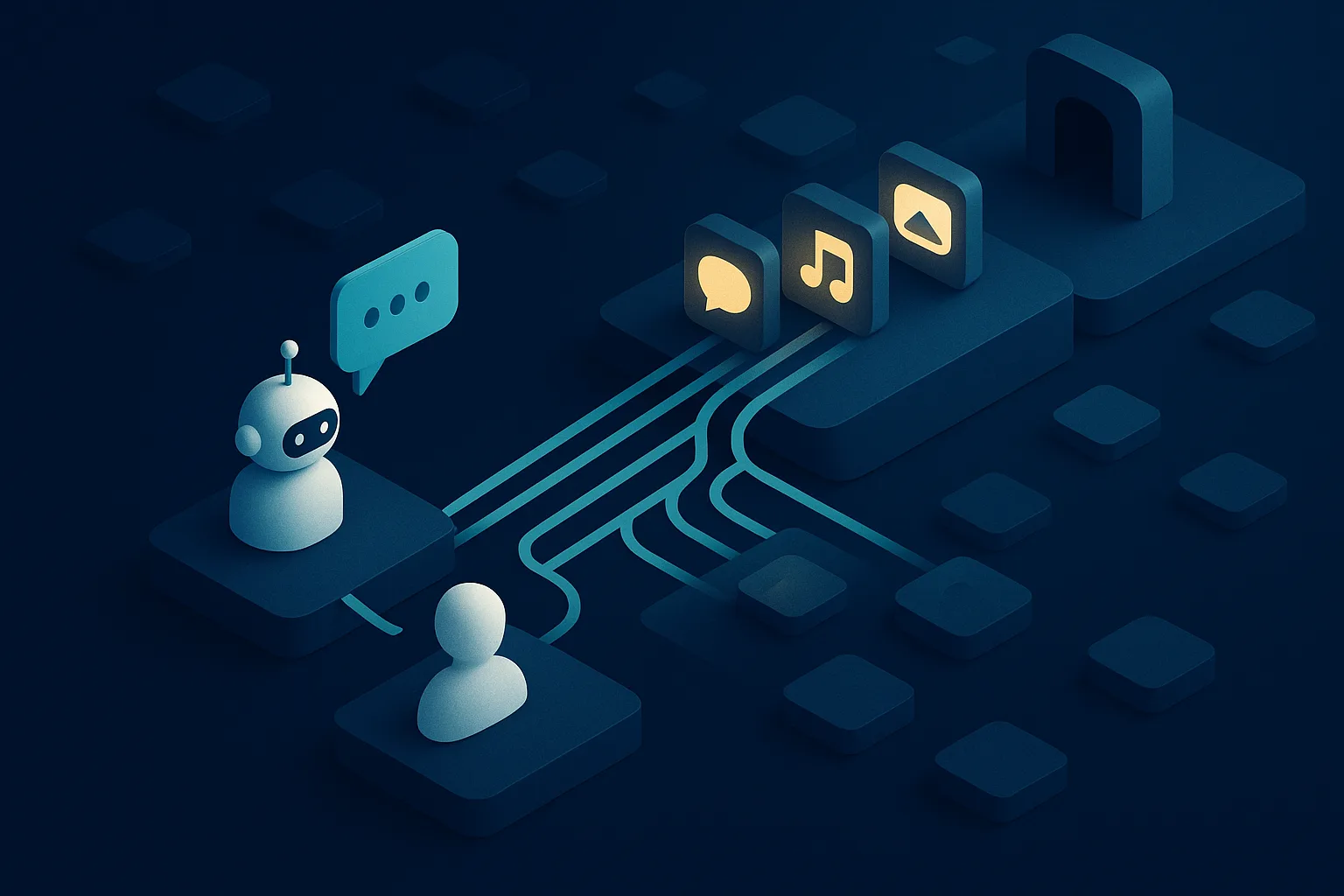
ChatGPT is turning app discovery into a recommendation problem before it ever becomes a store-search problem.
That is the real implication of AppTweak’s new AI Visibility for Apps launch, and it is the part app marketers should pay much more attention to than the product announcement itself. The bigger shift is behavioral. Users are increasingly asking an AI assistant what app can solve a job, then treating the shortlist they receive as the real discovery layer. By the time they reach the App Store or Google Play, the decision is already heavily shaped.
That does not mean app stores stop mattering. It means they stop being the first place where consideration happens.
In the old model, app discovery began in a taxonomy. A user entered a keyword, browsed ranked listings, compared screenshots, read reviews, and maybe installed a few options. In the emerging model, discovery begins in a conversation. A user describes a need in plain language, gets a compressed set of recommendations, and only then moves into the install or evaluation stage. The store becomes more like a fulfillment layer than the original source of demand.
That matters because conversational recommendation uses different logic than app-store ranking. AI systems do not only ask which listing matches a keyword. They ask which product best fits the expressed intent, which brands are consistently described across sources, which app categories map cleanly to the use case, and which entities feel trustworthy enough to recommend without much hedging.
That is why app recommendation engineering is now becoming a distinct discipline. It sits somewhere between ASO, SEO, entity clarity, review management, and product positioning. Searchless should be explicit about that now, because this category is going to fill up with vague commentary fast.
What changed, exactly
AppTweak’s framing is useful because it gives a concrete Tier 1 signal that app discovery is moving upstream. The company says its AI Visibility for Apps product is built around 10,000-plus prompts, more than 1,000 intents, and 200-plus app subcategories derived from app market intelligence. That structure matters. It suggests app recommendation in AI systems is being treated as an intent-and-entity problem, not a simple keyword-matching problem.
Business of Apps made the same implication more plainly. When users ask an AI tool for an app recommendation, they do not want a list of loosely related results. They want a curated answer. And when they get one, the shortlist itself becomes the new battleground.
That is the strategic shift. Discovery is no longer just about ranking when a user enters the store. It is about being one of the few candidates an AI assistant feels safe recommending before the store journey even starts.
The vendor motivations here are obvious. AppTweak wants to open a new category and sell into it. That is why it cannot be the only source. But the broader thesis also matches where the large platforms are moving. OpenAI’s apps ecosystem and in-chat flows, Apple’s natural-language search direction, and Google’s intent-driven Play experiences all point in the same direction. Discovery is becoming more semantic, more conversational, and more dependent on AI interpretation.
The result is a new recommendation stack with at least four layers.
First, there is the app-store layer, which still matters for metadata, screenshots, reviews, category placement, and conversion once a user arrives.
Second, there is the web and entity layer, where landing pages, FAQs, brand descriptions, help docs, and third-party mentions help an AI system understand what the app actually is.
Third, there is the trust layer, where reviews, press mentions, comparison posts, and usage evidence shape whether the system feels comfortable recommending the product.
Fourth, there is the intent layer, where the app must map cleanly to the user goal the AI is trying to satisfy.
Most app teams still optimize heavily for layer one and only lightly for the others. That is why this shift is going to create winners and losers faster than people expect.
Why classic ASO logic is no longer enough on its own
App store optimization still matters. Anyone saying otherwise is overselling the novelty. Titles, descriptions, screenshots, reviews, update notes, and category placement still affect installs, store conversion, and algorithmic visibility inside the stores themselves.
But AI recommendation introduces a second selection system that does not behave like store search.
Store search is still relatively constrained. The marketplace knows which category the app belongs to, it uses keyword and behavioral signals, and it ranks within a visible list. An AI assistant does not operate inside those limits. It has to interpret a user request, infer intent, search across its available signals, compress a market into a handful of candidates, and explain why those candidates fit.
That means the app is being judged on legibility, not just rankability.
If the AI cannot quickly understand what the app does, what problem it solves, what kind of user it serves, and how it compares to alternatives, the product becomes hard to recommend. Even a strong app can lose that test if its metadata is generic, its website is thin, its reviews are vague, and the surrounding web does not describe it in the same language that users use when asking for help.
This is why AppTweak’s own guidance around app-store metadata, web presence, and external authority feels directionally right. App visibility in AI systems depends on consistent positioning across surfaces. The app description cannot say one thing, the website another, and third-party mentions something else entirely. Inconsistent entities confuse recommendation systems.
That is also why update notes suddenly matter more than many teams assume. A vague “bug fixes and improvements” line is nearly useless as a machine-readable signal. A precise note about a new budgeting workflow, language-learning feature, sleep-support module, or team collaboration upgrade tells a recommender more about what the product actually does now.
In other words, AI systems reward specificity that many app marketers have historically treated as optional.
The real selection criteria are becoming visible
We do not yet have a public, definitive formula for how ChatGPT chooses app recommendations. Nobody does. Any article claiming exact ranking factors is bluffing.
But the emerging pattern is already pretty clear.
1. Intent fit comes first
Users rarely ask for an app by keyword in a conversational interface. They ask for help with a task.
That means the app has to align with expressed goals like “help me build a meditation habit,” “find a budgeting app that connects to my bank,” or “recommend an app for organizing client projects.” If the product is described mainly in broad brand language rather than user-outcome language, it becomes harder for the AI to map to the request.
This is a subtle but important difference. Traditional ASO often over-indexed on category words. AI recommendation will increasingly reward problem-solution clarity.
2. Entity understanding matters more than listing polish
An AI assistant does not only need to know that the app exists. It needs to understand what kind of thing it is.
That pushes teams toward clearer entity architecture: strong app landing pages, direct definitions of what the app does, use-case pages, explicit comparisons, and structured FAQ content. If the assistant can assemble a coherent profile of the app from multiple surfaces, recommendation confidence rises.
3. External corroboration shapes trust
Reviews, “best apps for X” lists, press coverage, and descriptive user commentary all become trust inputs. This is not new in principle, but it becomes much more important when the recommendation is compressed into a few names rather than displayed as a long store list.
In a store, a user can do the filtering. In AI recommendations, the system filters on the user’s behalf. That raises the value of third-party support.
4. Consistency beats isolated optimization
App teams often split ASO, SEO, PR, lifecycle, and product marketing into different silos. That worked reasonably well when discovery channels were separated. It works poorly when an AI system is pulling together signals from all of them.
If store metadata emphasizes “wellness,” the website emphasizes “sleep science,” reviews emphasize “anxiety reduction,” and media coverage frames the product as “mindfulness for work stress,” the system may still understand the general category, but it loses precision. In AI recommendation, fuzzy positioning can be fatal.

Why the App Store is becoming a downstream conversion surface
The most useful way to think about this shift is not that AI is replacing app stores. It is that AI is moving one step earlier in the funnel and taking over more of the consideration logic.
That means the App Store and Google Play still matter deeply, but they matter later.
If a user arrives already primed with a shortlist from ChatGPT, the store has less power to generate the candidate set and more power to validate or complete the choice. Screenshots, ratings, reviews, and listing quality still influence the final conversion, but they no longer do as much work in forming awareness.
This is the same structural pattern we have seen in other parts of the post-search economy. Recommendation layers are moving upstream. Marketplaces, travel aggregators, media platforms, and AI systems increasingly decide what deserves evaluation before the user reaches the traditional destination.
For app marketers, that changes what counts as acquisition readiness. A high-converting listing is not enough if the app never makes the shortlist. A well-run paid campaign is not enough if organic conversational discovery routes users elsewhere. A strong brand is not enough if the machine-readable explanation of the product is weak.
The practical takeaway is blunt. You now need to optimize the layer before the store.
What app teams should build now
The first move is not to panic and rewrite the whole stack. It is to tighten the surfaces that recommendation systems are most likely to read.
Start with the clearest possible statement of user jobs. Not marketing fluff, not internal product language, not category abstraction. Plain-English tasks users want to complete.
Then make sure those jobs appear consistently in:
- app title and subtitle where appropriate
- app descriptions and update notes
- support and FAQ pages
- website landing pages
- comparison and alternative pages
- onboarding copy
- app review prompts that encourage descriptive feedback
Third, treat third-party validation as recommendation infrastructure. That includes press mentions, category lists, high-quality descriptive reviews, and adjacent editorial coverage. AI systems often need external corroboration before they narrow a field confidently.
Fourth, stop treating store and web teams as separate universes. The app description, website copy, and market narrative need to reinforce one another. Recommendation systems punish internal inconsistency.
Finally, instrument for AI-assisted discovery, even if the traffic is still small. AppTweak is right about one thing that many teams still ignore: measurement comes first. If conversational discovery is already sending a trickle of high-intent users, that trickle will matter more over time. Teams that start measuring now will learn faster than teams waiting for the volume to become obvious.
The bigger strategic implication
This is not just an app-marketing tweak. It is part of a broader shift in how software gets discovered.
The web trained marketers to think in terms of pages and rankings. App stores trained them to think in terms of listings and conversion. AI recommendation layers force a combined model, where a product has to be understandable as an entity across multiple surfaces and useful enough to be shortlisted by a system acting on the user’s behalf.
That is why the category language around “AI visibility for apps” will probably stick. It is imperfect, but the market needs a way to describe the problem.
The cleanest definition is this: app AI visibility is the degree to which an app can be understood, trusted, and recommended by conversational systems before the user reaches the store.
That is a better framing than just calling it “ASO for AI.” It makes clear that the challenge is not simply ranking in another interface. It is becoming recommendation-ready across the whole open-web and app ecosystem.
Teams that understand this early will not just defend store performance. They will shape the new upstream layer of demand.
Teams that ignore it will keep polishing listings while the shortlist gets decided somewhere else.
Run an AI Visibility Audit Before the Recommendation Layer Hardens
If your app, product, or brand is still treating AI recommendation as a curiosity, that is the wrong posture. The shortlist is becoming the new battleground.
Run the audit: audit.searchless.ai
Sources
- AppTweak, “AI Visibility: The first AI search platform built for mobile apps” (Apr. 2026), https://www.apptweak.com/en/aso-blog/ai-visibility-the-first-ai-search-platform-built-for-mobile-apps
- AppTweak, “ChatGPT might have changed app discovery: What it means for ASO” (Apr. 2026), https://www.apptweak.com/en/aso-blog/chatgpt-might-have-changed-app-discovery-what-it-means-for-aso
- Business of Apps, “As app discovery expands to ChatGPT, AppTweak launches AI Visibility for Apps” (Apr. 2026), https://www.businessofapps.com/news/as-app-discovery-expands-to-chatgpt-apptweak-launches-ai-visibility-for-apps/
FAQ
Is ChatGPT replacing the App Store?
No. It is moving earlier in the discovery funnel. The store still matters for conversion, validation, and final evaluation.
What does ChatGPT seem to optimize for in app recommendations?
The strongest emerging signals are intent fit, clear entity understanding, external corroboration, and consistency across store, web, and third-party surfaces.
What is the biggest mistake app marketers can make right now?
Treating AI discovery like a minor ASO extension instead of a separate upstream recommendation layer.
If you are building pages and positioning for the new recommendation layer, start with why source selection changes so often, then connect that work to your broader AI visibility system.
How Visible Is Your Brand to AI?
88% of brands are invisible to ChatGPT, Perplexity, and Gemini. Find out where you stand in 60 seconds.
Check Your AI Visibility Score Free